

Addressing Mental Health in the Workplace: Small Changes, Big Impact
Workplace mental health challenges cost organizations billions annually, yet many leaders overlook simple, affordable strategies that can transform employee well-being. This article draws on insights from mental health professionals and workplace experts to outline eleven practical approaches that require minimal investment but deliver measurable results. From establishing call-free Fridays to creating dedicated decompression spaces, these tactics prove that meaningful change doesn't always demand major budget overhauls.
- Adopt Daily Mental Reset Breaks
- Host Weekly Cross-Team Podcasts
- Declare Call-Free Fridays
- Start Meetings with Personal Check-Ins
- Safeguard Morning Focus Intervals
- Normalize Candid Well-Being Conversations
- Introduce On-Site Decompression Sessions
- Block Protected Offline Windows
- Implement Cost-Effective Wellness Training
- Hold Capacity Reviews Regularly
- Increase Access to Daylight
Adopt Daily Mental Reset Breaks
One small but incredibly meaningful step my workplace took was introducing a "15-minute mental reset break" policy—a daily, optional break that employees can use for anything that supports their mental well-being. It's not a long lunch, not a meeting buffer, and not a coffee run. It's a protected pause built into the workday, with no explanation required and no guilt attached.
What made this initiative powerful was its simplicity. Many employees were already struggling with stress, back-to-back meetings, and the pressure to always be "on." Leadership realized that while large mental-health programs are valuable, people often need small, daily moments of recovery to stay grounded and focused. So they encouraged everyone—from managers to interns—to take 15 minutes at any point in the day to walk outside, breathe, stretch, meditate, listen to music, or simply step away from the screen. No emails, no Slack messages, no multitasking.
The impact was surprisingly big. Employees started reporting fewer afternoon crashes and less irritability. Teams noticed that people came back to conversations with clearer thinking and kinder communication. For some, the break became a ritual that helped reduce anxiety; for others, it created a sense of permission to prioritize themselves without needing a "reason." Managers also began modeling the behavior, which helped shift the culture from one that valued constant productivity to one that recognized the human side of work.
Over time, this small step created a ripple effect—people started taking lunch away from their desks, scheduling "focus hours," and checking in on teammates more often. The office atmosphere felt lighter, more respectful, and more supportive. What started as a 15-minute break became a subtle but powerful message: your well-being matters here, and rest isn't something you have to earn.
Sometimes the smallest changes make the biggest difference, especially when they give people permission to take care of themselves.

Host Weekly Cross-Team Podcasts
We started hosting short weekly podcasts on Discord. Four people from different departments join each time with a loose topic to start with. HR moderates, but the goal isn't to stay on track. Within a few minutes, people drift into stories, jokes, and small confessions about their week. The topic fades and the conversation becomes the point.
It has quietly become one of the best things we've done for mental health. People who rarely speak in meetings now have a space where they feel seen. It helps everyone remember there are voices behind the screens.
Since we are a remote organization, we also meet every Friday for company-wide games and check-ins. The combination keeps our week from feeling like a blur of tasks. It gives everyone a moment to talk and reset together.

Declare Call-Free Fridays
At Legacy Online School, a small initiative that had a pretty big impact on employee morale was the implementation of 'No Meeting Friday' for most of our employees! You would think this is an obvious and basic concept, yet in reality removing one day of constant video calls resulted in employees being able to recharge, refocus and reset themselves for the week ahead.
The mental toll on a global, remote workforce of having to adjust their schedules to accommodate every time zone possible in addition to back-to-back Zoom meetings can begin piling on employees without them even realizing it. After we declared Fridays as no-meeting days, our employees began to make more time for additional personal needs such as taking walks, catching up on reading/deep focus, and beginning the weekend early without feeling pressured to be on a set schedule. Productivity continued to rise, as did quality of workplace communication between employees throughout the week.
What most surprised me, however, was hearing so many employees across the organization say that creating that small boundary of 'No Meeting Friday' gave them a sense of trust. Trust reduces stress more effectively than any formal wellness program that can be implemented. When people feel that they are able to choose how, when, and where they spend their time, they are able to give their full energy when they are working.
From this experience, I've learned that there are many different ways we can help employees' mental health, but sometimes it doesn't take grand gestures (more perks), sometimes it actually takes the removal of pressure (no-meeting days), which can have an even larger positive effect than providing extra perks to our employees.

Start Meetings with Personal Check-Ins
We begin every meeting with a personal check-in. The check-in varies depending on the length of the meeting, the number of people attending, and how long it has been since our last meeting.
Some examples can be as quick as 1–3 minutes. On a scale of 1–5, what is your energy like today? Raise your hand with your digits up to show us. By seeing the energy level of the room, we know what to expect from the room and/or if we need to pivot a little or a lot to get what we need from this meeting.
If there is more time in a meeting, it could be 5 or 10 minutes dedicated to checking in with the person beside you about what is on their mind today—personal or professional. This impacts mental health because it allows time for humanness. It creates life-work integration rather than trying to balance.

Safeguard Morning Focus Intervals
In high-pressure engineering environments, we often obsess over system latency while ignoring the bandwidth limits of our own brains. For years, we tried to fix burnout by adding perks like wellness apps or flexible stipends. These were well-intentioned, but they treated the symptoms rather than the root cause. We realized that the architecture of our work day was the actual problem. The most impactful change we made was not adding a new program, but removing the expectation of constant connectivity.
We introduced a culture of protected deep work where being offline is the default setting for the morning hours. In a field driven by rapid iterations and constant notifications, silence is radical. We stopped treating responsiveness as a proxy for productivity. Just as you would never interrupt a server while it is compiling a massive dataset, we stopped interrupting researchers when they were solving complex problems. We made it clear that protecting your focus was a professional requirement, not a personal favor.
The shift was immediate. I recall a check-in with a senior architect who had been on the verge of quitting due to stress. He told me that for the first time in a decade, he was not starting his day in a defensive crouch, waiting for the next crisis to hit his inbox. He had space to breathe and actually solve the problems we hired him for. It reminded me that the best way to support mental health is not always about offering more help. Sometimes it is simply about creating enough quiet for people to hear themselves think.

Normalize Candid Well-Being Conversations
One tiny step that had a huge outward impact was to normalize open conversation surrounding mental health. We encouraged our leaders to be intentional about checking in with employees on a more routine basis from a holistic perspective - not just about work but about how the employee is doing as a person. This simple change removed the stigma associated with speaking up and allowed employees to more easily request assistance when they felt they needed to do so.
In addition, we elevated flexibility within the organization as a top priority giving team members greater autonomy around schedules during the busiest/crunch time of the business. The results were very significant; employees felt less inhibited to be candid about their status, burnout rates lowered, and employee engagement improved significantly because employees were aware that their well-being matters to organization as a priority instead of an afterthought.

Introduce On-Site Decompression Sessions
Being exposed to all the devastating realities of human tragedy is the name of the game when it comes to medical malpractice. Hearing the stories and seeing the burden of people whose futures depend on us entirely, it's a lot to take in, and it takes a huge toll on our mental health.
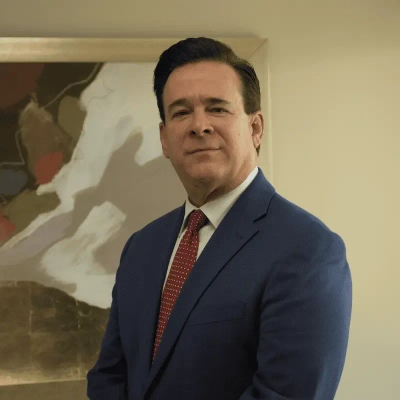
Offering an EAP number wasn't enough in my eyes, so we implemented a mandatory on-site decompression session. It's a simple personal trainer-led class that includes structured breathwork exercises and spine-aware decompression movements meant to release tension held from sitting and potential trauma stored throughout the body. It's led by Coach Daniel Argota; he's been helping firms and companies decompress all the stress that accumulates in hectic work environments. After our first month of doing these sessions twice weekly, we've seen a huge impact: fewer migraines and improved focus. It's subtle, but our team loves the sessions, and it's helped us bond as a team more tightly, bringing more positive air into the firm when things get hairy.
Block Protected Offline Windows
One of the small but significant steps we took was putting "protected focus and offline time" in everybody's calendar, to include mine.
We were direct in our communication, letting all of us know it was o.k. to schedule blocks of time for concentrated work, medical or therapy appointments, maybe even downtime. And practically we were so mindful of each other's different situations that short periods of unreachability became quite acceptable. There were fewer instances where people felt the urge to always stay connected. They would take time to take care of themselves without feeling bad. This is reflected in the discussions during meetings - they become calmer, more engaging, and less confrontational.

Implement Cost-Effective Wellness Training
Our organization surveyed educators and all school-related employees to understand their needs. We then implemented wellness-focused training sessions covering stress management, mindfulness, exercise, art/music therapy, nutritional consults, and meditation. The trainers were provided through our medical insurance provider (Aetna), making it a cost-effective solution. This initiative resulted in higher job satisfaction and increased employee morale across the organization. Partnering with our Employee Assistance Program (EAP) was another effective way to offer counseling services to employees in need.

Hold Capacity Reviews Regularly
We introduced regular workload check-ins that focus on capacity rather than performance. Employees felt more comfortable raising their burnout concerns early. This small change improved morale without the need for any formal programs or pressure.

Increase Access to Daylight
A major one: access to daylight! A window is amazing.
I don't currently have employees, but rather contractors. This gives a lot of quality of life and workplace satisfaction. They choose their own schedule, away time, and work. They also make a greater portion of their income, and are technically "private practice" clinicians who share in services (billing, marketing, and everything else people don't want to have to do for themselves) and the reputation of our company.