

Building a Values-Driven Team: How to Align New Hires with Company Culture
Building a team that lives your company's values starts long before an employee's first day and continues well beyond orientation. This article compiles proven strategies from industry experts who have successfully embedded culture into every stage of the hiring and onboarding process. Learn 25 practical methods to ensure new hires don't just understand your mission—they embody it in their daily work.
- Test Authentic Scenarios during Interviews
- Demand a One-Page Mission Translation
- Require Pre-Activation Safety Certification
- Start on Live Jobs beside Masters
- Hold a Week-One Principles Conversation
- Shadow a Claim Walkthrough to Learn Client Care
- Pair Newcomers with a Values Buddy
- Role-Play Honest Homeowner Advocacy with Visuals
- Reveal Stakes of True Craft on Site
- Make One Car Entirely Their Responsibility
- Map Personal Dreams with Managers Early
- Conduct a Tactical Readiness Review
- Ship a Production User-Facing Fix Immediately
- Hire for Empathy before Skill
- Run a Policy-to-Culture Alignment Audit
- Enforce Tolerances Beyond Factory Spec
- Codify Roles and Auto-Create Entry Plans
- Ask Concrete Practice Changes Upfront
- Lead Ride-Along to Show the Why
- Host Intentional Kickoffs with Structured Dialog
- Have the CEO Tell the Origin
- Write Core Tenets Then Recruit Against Them
- Issue a Three-Line Decision Card
- Reinforce Purpose from Recruiting through Rituals
- Teach through Actual Experiments and Results
Test Authentic Scenarios during Interviews
Alignment with company values should not start on day one. It should start during the interview. By the time someone walks in as a new hire, you should already know they are the right fit. A candidate can be an incredible specialist, but completely wrong for your team if the values do not match.
How do you actually check this? Ask direct questions about the things that matter to your company. Do not dance around them with hints or clever tricks. Present real situations from your own experience and ask the candidate how they would handle them. This tells you far more than any generic question about their strengths and weaknesses.
One thing I always do is include scenarios where our company was clearly in the wrong. Candidates who try to guess the "right" answer will agree with everything. The ones who actually share your values will push back and point out the problem. That reaction is what you are looking for.
The impact is straightforward. If you skip this step, you end up with someone who either quits or gets let go within a few months. Either way, you absorb the cost of hiring, onboarding, and lost productivity for nothing. A few honest questions during the interview would have prevented all of it.

Demand a One-Page Mission Translation
I make every new hire write a short "mission translation" within their first two weeks.
Not a summary of our values page. A one-page explanation of how our mission shows up in their specific role — what decisions it should influence, what trade-offs it justifies, and where it might create tension.
Early in my career, I assumed alignment happened through onboarding decks and all-hands meetings. It doesn't. People nod at values like "customer obsession" or "ownership," but those words are elastic. Everyone interprets them differently.
By asking new hires to articulate what the mission means in their day-to-day work, you force clarity.
For example, a product manager might write: "If we truly prioritize long-term customer outcomes, I should resist shipping short-term feature requests that increase complexity." An engineer might interpret it as investing in reliability over speed. A sales rep might frame it around not overselling roadmap promises.
We review it with their manager. If there's misalignment, we catch it early — before it turns into behavior.
The impact has been subtle but powerful. Decision quality improves because people have a shared reference point. It also surfaces values conflicts quickly. If someone's interpretation consistently prioritizes personal metrics over company outcomes, you see it.
The trade-off is time. It takes managers 30-45 minutes to discuss properly. But that upfront investment prevents months of drift.
Mission alignment isn't about memorizing principles. It's about translating them into choices.
When someone can explain how the mission constrains their decisions, you know it's real.

Require Pre-Activation Safety Certification
I run multiple brands under Tarlton Technologies—Road Rescue Network, Interstate Fleet Services, ePropertyAssist—and the thing that keeps new people aligned isn't a handbook or orientation deck. It's making them earn a job on the platform before they're activated.
For Road Rescue Network, every rescuer goes through mandatory safety training and has to pass certification on PPE protocols, warning device placement, and MUTCD guidelines before they can accept a single job. No shortcuts. If they skip reflective gear or don't set up cones properly, they're suspended—we've had to remove rescuers in the first week because they thought 'fast' meant 'safe enough.' It doesn't.
This filters out people who just want quick money and keeps the ones who understand we're not running gig work—we're running infrastructure. Since implementing the pre-activation cert system, our customer complaint rate dropped by over 60%, and our rescuer retention after 90 days went up because the people who make it through actually get what we're building.
The side effect? Our team knows from day one that we're serious about the mission—helping stranded drivers safely—not just processing transactions. That clarity shows up in every review, every interaction, and every job completed right the first time.
Start on Live Jobs beside Masters
I put new hires on actual job sites within their first week—not behind a desk doing paperwork. At Grounded Solutions, we've found that seeing a residential customer's face when their power comes back on, or watching a commercial project manager coordinate three trades at once, does more to communicate our "pride, grit, and hustle" mission than any orientation slideshow ever could.
We pair them with a journeyman who embodies our core values: Character, Discipline, and Freedom. The apprentice sees how our guys show up on time, communicate transparently about pricing, and don't cut corners even when no one's watching. That real-world modeling is everything—it's how they learn that we're not just running wire, we're building trust in every trench we dig and every panel we install.
The impact shows up in our retention numbers and our reputation across Central Indiana. When someone starts by doing the work alongside our best people, they either buy into the culture immediately or realize it's not for them before we've invested months of training. The ones who stay become the kind of team members who respond to customer queries within 24 hours without being reminded, because they've already seen why that matters.

Hold a Week-One Principles Conversation
The one thing that made the most consistent difference was replacing the values slide deck with a values conversation and doing it in the first week, not the first day.
Most onboarding programs introduce mission and values on day one, sandwiched between the benefits walkthrough and the IT setup. It's a lot of information arriving at the worst possible moment, when a new hire is overwhelmed, performing competencies they don't yet fully have, and trying to remember where the bathrooms are. The values get heard but not absorbed.
What worked better was waiting until the end of week one—after the person had seen a few real decisions get made, sat in a few real meetings, and started forming their own impressions—and then having a genuine conversation about what they'd noticed. "what have you observed so far about how we operate, and does it match what you expected?"
That question does something the slide deck can't. It forces the new hire to actively compare what they were told with what they've actually seen, which means they're processing values through lived experience rather than corporate language. It also creates a moment of honest dialogue, because if there's already a gap between what was said in the interview and what they've witnessed on the ground, that's exactly the conversation you want to be having in week one rather than month six.
The impact over time was noticeable in two ways. First, people settled into the culture faster because they'd been invited to interrogate it rather than just accept it. They felt like participants rather than recipients. Second—and this one surprised me—it surfaced culture drift early. When a new hire, fresh from the outside, tells you that a specific thing they witnessed felt inconsistent with what they were told the company valued, they're usually right. Long-tenured employees stop seeing the drift. New ones see nothing else.
Alignment with mission and values is something you invite people into through honest conversation, and then reinforce through the thousand small decisions they watch you make over the following months. The first week just sets the tone for whether that conversation is one they feel safe having.

Shadow a Claim Walkthrough to Learn Client Care
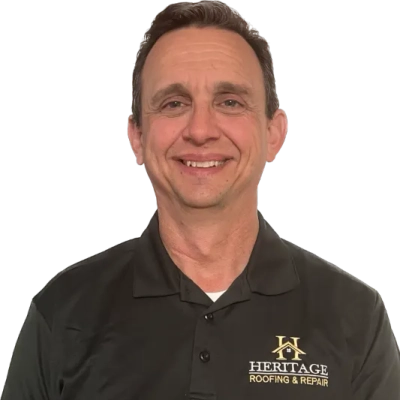
I run Heritage Roofing & Repair here in Berryville, Arkansas—family business for over 50 years. When I bring on new people, I have them shadow an insurance claim walkthrough with one of our veteran crew members during their first week. Not the installation—the claim process itself.
Here's why: they watch us advocate for a homeowner who's dealing with hail damage and doesn't understand their policy. They see us meet with the adjuster, document everything properly, and explain the difference between ACV and RCV coverage in plain English. That moment when a stressed-out homeowner realizes we're fighting for them—not just doing a job—that's when new hires understand what we're actually about.
The impact is they handle customer communication differently from week one. Our new guys don't just show up and tear off shingles—they explain what they're doing and why. We've had multiple reviews specifically mention how "knowledgeable" and communicative our crew is, and I think it's because they've seen that roofing isn't just about materials and labor—it's about being someone's advocate when their home is damaged.
It also filters out people quickly who just want a paycheck. Storm chasers burn through this area constantly, and homeowners can smell that from a mile away. When your crew genuinely cares about getting someone a fair claim settlement, it shows in everything else they do.
Pair Newcomers with a Values Buddy
As CEO of Software House, the one thing we do that makes the biggest difference is pairing every new hire with a "values buddy" during their first 30 days. This isn't their manager or a mentor for technical skills. It's a tenured team member specifically chosen because they embody our company values in their daily work.
The values buddy meets with the new hire weekly for informal 20-minute conversations about how our values show up in real decisions. For example, when we say we value transparency, what does that actually look like when a project is behind schedule? When we say we value ownership, how does that play out when a bug hits production at 6pm on a Friday?
The impact has been measurable. Before implementing this system, we had a 25% turnover rate in the first six months because new hires would discover a cultural mismatch too late. After two years of the values buddy program, that number dropped to 8%. New hires also ramp up to full productivity about three weeks faster because they understand the unwritten rules of how we operate.
The most surprising impact was on the buddies themselves. Team members who serve as values buddies report feeling more connected to the company mission because explaining our values to someone new forces them to reflect on why those values matter. It's become one of our most sought-after internal roles.

Role-Play Honest Homeowner Advocacy with Visuals
I've been with M&M Gutters & Exteriors since 2005 (started as an installer, moved into sales/management, bought the company in 2010), so I've lived our mission of being an advocate for homeowners and our core values (communication, integrity, responsibility, community, adaptability) on both the production and leadership sides.
One thing I do with every new hire is a "homeowner advocacy" role-play using real scenarios we see in Utah--like ice dams where the right answer is a properly integrated roof heat cable + snow retention plan, not just selling the biggest ticket. I'm listening for how they explain options, set expectations, and say "you don't need that" when it's true, because we're serious about "we're not going to sell you a job that you don't need."
Then we make them build the same scope in HOVER (our 3D visualization tool) and present it back like they're talking to a homeowner. If they can't communicate clearly and transparently with visuals and measurements, they're not aligned with how we operate.
Impact: customers feel the difference immediately--fewer misunderstandings, fewer "that's not what I thought I was buying" issues, and way less finger-pointing between trades because we're vertically integrated and the expectation is ownership of the whole exterior outcome from day one. It also filters out people who want to "close" more than they want to solve.

Reveal Stakes of True Craft on Site
I've been running Smyth Painting Company since 2005, and one thing I've learned is that craftsmanship means nothing if your team doesn't care about the work. So from day one, I bring new hires to an active job site—not just to observe, but to see the "why" behind what we do.
I'll walk them through a project like the Fairholm Estate or the Loeb Center. These aren't just paint jobs—they're historic preservation work where one careless move can damage something irreplaceable. When they see our crew hand-sanding wood to preserve the grain or applying three clear coats to a handrail, they understand immediately that we're not just slapping paint on walls.
The impact? Our crew retention is solid, and we rarely get callbacks for sloppy work. When someone starts by seeing the meticulous prep on a $200K+ Jamestown new build—sanding between every lacquer coat, installing soft-close hinges, treating every surface like a showpiece—they either buy into that standard or they self-select out early. Either way, it saves everyone time and protects our reputation.
Make One Car Entirely Their Responsibility
At Sienna Motors in Pompano Beach, I do a "one-vehicle ownership" onboarding: on day one, a new hire has to walk a single car from intake to delivery like it's theirs. They write the listing highlights, explain the inspection notes, and practice how they'd answer the hard questions (history, pricing, trade-in, financing) without spinning.
I use our consignment playbook as the litmus test because it forces integrity: 40+ professional photos, a clear minimum acceptable price, and zero "we'll figure it out later" language. If they can't be precise and transparent when it's someone else's car and money on the line, they won't protect our white-glove standard when it's our inventory.
Impact is immediate: fewer misunderstandings, cleaner handoffs, and way less rework. When people learn to document and communicate like we do from day one, customers feel the "pressure-free" experience instead of hearing it as a slogan.

Map Personal Dreams with Managers Early
We run what we call the "Dreams Program"—every new hire sits down with their manager in the first week to map out their personal goals, not just work stuff. Could be buying a house, learning a new skill, traveling somewhere specific, whatever matters to them. Then we build a plan together to help make it happen.
The impact is measurable. When we acquired Real Time Consultants in 2021, we brought their team through this process immediately. A year and a half later, those employees are still with us and actively contributing to growth. Compare that to typical MSP acquisition integration where you lose 30-40% of staff in year one.
Here's the thing most people miss: when someone knows you care about their dream of starting a side business or paying off student loans, they show up differently for your customers. Our client retention sits above 90% ARR, and I'd bet money it's because our people actually give a damn—not because we have better monitoring tools than the next MSP.
We've done this through three acquisitions now (Vital I/O, iTeam, US Computer Connection). Same playbook every time. It's not about culture fit interviews or values posters in the break room—it's about putting money and time where your mouth is on day one.

Conduct a Tactical Readiness Review
My background in the U.S. Army and private security taught me that alignment starts with a shared "mission-first" mindset. I put every hire through a Tactical Readiness Review where they must manage a simulated security breach using our AI-powered mobile surveillance trailers.
Hires must configure geo-fencing zones and AI alerts for a mock construction site to prove they understand proactive protection over passive recording. This immersion ensures they can deliver the real-time threat detection that defines Mobile Vision Technologies' reputation.
This approach has helped our team reduce client false alarms by 40% by training them to focus on high-value "signal" over environmental noise. It transforms a technical job into a disciplined security operation, ensuring every team member is ready for rapid, off-grid deployments.

Ship a Production User-Facing Fix Immediately
The one thing that has made the biggest difference for us is connecting new hires to an actual problem on day one, not just a series of orientation documents.
Most onboarding is fundamentally about the company telling the new person how great it is: here is our history, here is our mission statement, here is our culture deck. None of that creates alignment. What creates alignment is someone experiencing firsthand why the work matters.
I make sure their first real task is something that is visible and connected to a user problem we are actively trying to solve. Not a toy project, not a tutorial. Something that ships. Even if it is small. At GPUPerHour.com, that might mean adding a new cloud provider to our pricing tracker or fixing a data discrepancy a user reported. It is real work with real stakes.
The impact is that alignment happens through experience rather than declaration. When someone has solved a real problem in their first week, they understand the mission in a way no document can convey. They have felt the friction of the problem and the satisfaction of moving it forward.
The practical thing about this approach is it also surfaces misalignment quickly. If someone struggles with the context or motivation behind the first real task, that is information worth having in week one rather than month three. Giving people real work immediately respects their competence and makes the mission tangible from the very start.
Hire for Empathy before Skill
I run a company in the nonprofit fundraising space, so the people we serve are often stretched thin, under-resourced, and carrying more responsibility than their teams can comfortably handle. That context matters when I'm hiring. I look for empathy before I look for skill, because if someone doesn't instinctively understand that reality, no amount of training will create it.
The tell is usually subtle. It shows up in whether a candidate asks curious questions about our customers or just talks about what they can do for us. It shows up in how they react when I describe the challenges nonprofit teams face daily. Genuine empathy isn't performed. It's either there or it isn't.
When we get this right, alignment takes care of itself. People who truly care about the mission don't need constant reminders of why the work matters. They feel it. They bring that energy into every customer interaction, every product decision, every internal conversation. It becomes the air they breathe.
When we've gotten it wrong, the disconnect shows up fast. Someone might be talented and hardworking, but if they can't connect with the reality of what our customers go through, they struggle to fit into a culture built around serving those customers well. Empathy isn't a nice-to-have. It's the foundation everything else is built on.

Run a Policy-to-Culture Alignment Audit
As President of Safe Harbors Travel Group, I align new hires by having them perform a "Policy-to-Culture" audit where they map a client's unique corporate values to our specific travel management technologies. This ensures they immediately understand that our mission is centered on proactive "Duty of Care" and strategic foresight rather than simple logistics.
We use real-world case studies, such as determining how to safely integrate sharing-economy tools like Uber or Airbnb for the 33% of travelers who prefer them. This exercise teaches our team to provide personalized service models that respect traveler autonomy while maintaining strict institutional safety standards.
The impact is a workforce that operates with unmatched response speed and a "white-glove" concierge mindset in high-stakes environments. By focusing on these intelligent travel solutions from day one, our staff becomes trusted partners capable of managing complex global logistics with total accountability.

Enforce Tolerances Beyond Factory Spec
With 30 years in marine service rebuilding 100+ engines annually, I've found that alignment starts in the grease, not a boardroom. We require every new hire to master internal tolerances that are twice as strict as factory manufacturer specs before they ever lead a project.
I start hires on the complete teardown of a "0" time rebuilt outboard to show them how a Tohatsu engine's longevity depends on microscopic precision. This hands-on immersion ensures they understand that a single missed seal isn't just a technical error; it's a compromise of a client's safety in Cape Cod Bay.
This strategy allowed our shop manager to rise from a 2006 yard laborer to General Manager because he mastered the "0" time rebuild process from the ground up. The impact is a 30-year retention rate for our core customers who trust us to prioritize seaworthiness over quick profit.

Codify Roles and Auto-Create Entry Plans
I codify the role, company context, and expected outcomes, then use ChatGPT to generate a role-specific onboarding plan that a new hire can execute without guesswork. For example, when onboarding a contractor into a custom SEO workflow, I provide exact deliverables, quality standards, brand voice, and handover assets so the plan includes day-by-day tasks, checklists, example work, and review gates. This makes our mission and values concrete by tying them to everyday actions and quality standards instead of abstract statements. It reduces ambiguity and helps new hires contribute effectively sooner, while a human lead reviews early work and gives feedback so the hire learns judgment, not just the steps.
Ask Concrete Practice Changes Upfront
One thing I do is embed practice-focused assessment into onboarding by asking new hires specific, concrete questions about what they will do differently in sessions. We use those answers in early supervision to reinforce behaviors and to track short-term practice change. When clinicians can clearly name and describe those shifts, it tells me the training landed and that they are aligned with our mission and values. That clarity tends to increase clinician confidence and intentional decision-making, and we observe it alongside stronger caregiver collaboration and fewer crisis escalations over time.

Lead Ride-Along to Show the Why
One thing I make a point of doing with new hires is taking them through what I call a "ride-along orientation." Instead of just going over the handbook or policies, I spend a few hours on-site with them, showing not just how we do the work, but why we do it—the safety standards, the quality expectations, and the way we treat clients and each other. I share stories from past jobs where our values made a real difference, both in outcomes and in team culture.
New hires start to see themselves as part of a larger mission rather than just performing tasks. They ask more thoughtful questions, take initiative, and naturally mirror the behaviors and standards we care about. It also builds a sense of belonging early on, which reduces turnover and increases engagement. By embedding the mission in real-world examples instead of just words on paper, the values stick in a way that shapes decisions and attitudes from day one.
Host Intentional Kickoffs with Structured Dialog
One thing I do is convene well-designed gatherings that bring new hires together with their team and leaders early on. We use that time to really get into the company mission and values, help people get to know one another, and create a shared understanding of how the team's work fits the bigger picture. I include structured conversations to surface pain points and agree on initial ways of working so everyone starts with clarity and mutual expectations. That early investment sets the tone, accelerates trust among colleagues, and helps new hires see how their role contributes to our goals. I design these sessions to be practical and meaningful rather than generic team bonding.

Have the CEO Tell the Origin
One thing I consistently do to ensure new employees correspond to the organization's mission and values is to have the CEO personally communicate the "why" from day one.
Mission statements in a handbook don't create alignment. Leadership conviction does. During onboarding, I ensure the CEO shares the company's origin story: why it was founded, what problem it set out to solve, and what standards it won't compromise. That context renders abstract values tangible.
From there, we connect the mission directly to the new employee's role. It's not enough to say, "This is what we stand for." We clarify how their daily decisions embody those values and how their performance will be evaluated.
The impact is immediate. When people understand the purpose of their work, commitment shifts. It stops feeling like a job description and starts feeling like a responsibility. Alignment improves, accountability strengthens, and cultural consistency becomes easier to maintain.
Agreement with the mission is not created through repetition, but through integration and leadership accountability.
Write Core Tenets Then Recruit Against Them
One concrete thing I do is write down our core values, post them where the team can see them, and hire specifically against those values. That practice forced me to interview far more candidates and reject many who did not fit, but it helped me identify people who were loyal and eager to grow with the company. Hiring against written values brought in staff who share our mission of exceptional patient care and support for the nursing team. The result is a stronger culture and improved morale from day one.

Issue a Three-Line Decision Card
The one thing I would do from the start is hand every new hire a one-page decision card with three fixed lines.
The first line states who the work serves.
The second line states the standard that never moves.
The third line states what a poor shortcut costs in time, money, or dignity.
That sounds simple, but it changes behavior fast. A new hire can carry that card into every decision during the first 30 days and check their judgment against those three lines in less than 15 seconds. That gives them a practical way to understand the company's mission without sitting through hours of vague culture talk. It turns values from posters on a wall into a real operating standard.

Reinforce Purpose from Recruiting through Rituals
It's important for new hires to have a clear understanding of the organization's mission prior to them even joining the company. For our agency, this means an extensive emphasis on what the mission, vision and values of our organization are—from our job postings, to our phone screenings, to our interviews. Each candidate gets various documents, insights, and feedback during the recruitment process as to what the purpose of our organization is and why it is so critical. In addition, we have a formal onboarding process where all new hires meet with agency leadership during various new hire orientation sessions to get perspective on the agency's culture, history and purpose. This helps new hires see the impact the organization is having and what role they will be playing as it relates to helping the company achieve its goals.
For our organization, instilling these values goes beyond the recruiting, pre-boarding and onboarding process. We continually reinforce our mission, vision and values at our bi-monthly agency staff meetings. We share success stories as it pertains to the work, how that work is connected to the mission and what impact that work is having as it relates to our services. This keeps what the organization is trying to achieve at the front and center of everyone's minds on an ongoing basis, which in turn leads to a greater sense of urgency and importance to the tasks that need to get done.

Teach through Actual Experiments and Results
I've always been a do first, learn as you go sort, so one thing I tend to do with my new hires is to walk them through real campaign experiments instead of starting with policy documents. I show them how a creative idea moved from hypothesis to testing to measurable revenue impact for a client, which is especially relevant to those that are fairly early on in their careers or are making a switch from a different industry. That conversation helps people understand our philosophy immediately, namely that disciplined experimentation is what drives our long-term growth. I encourage questions about why we made certain decisions so they see how values translate into action because I really want to ensure that new hires understand the reasoning behind the work, not just do it by rote. I find that this approach reduces hesitation and builds confidence because new hires see that thoughtful testing is what we value, and that it is ok to not be perfect.