

Ensuring Fairness in Hybrid Work Policies
Hybrid work policies promise flexibility, but without careful planning they can create unfair advantages for some employees over others. This article brings together expert insights on practical strategies to build fairness into remote and in-office arrangements. From performance metrics to meeting structures, these approaches help organizations ensure equal opportunity regardless of where team members choose to work.
- Replace Availability Signals With Regular Priority Checkpoints
- Move Supervision To Structured Group Consults
- Define Criteria Before Decisions
- Adopt Deliverable Based Performance Reviews
- Create Weekly Results Recognition Log
- Shift To Data Driven Operational Metrics
- Route All Work Through Ticketed Chains
- Unify Dashboards And Digital Plan Handoffs
- Set Uniform Therapist Measures And Drills
- Run One On Ones Exclusively Online
- Measure Copilot Adoption And Link Platforms
- Designate Offsite Emcees To Elevate Participation
- Implement Asynchronous Video Status Updates
- Standardize Secure Access And Outcome Evaluations
- Hold Virtual First Sessions With Summaries
- Migrate Legacy Files To SharePoint Cloud
- Make Office Attendance Voluntary
- Document Role Goals And Schedule Mentorship
- Equip Rooms For True Hybrid Parity
- Tie Progress To Common Project Milestones
- Lead Formal Agendas With Alternate Facilitators
- Leverage Coworking Hubs For Balanced Connections
- Record Daily Guest Impact Notes
Replace Availability Signals With Regular Priority Checkpoints
In hybrid workplaces, fairness improves when performance expectations are made explicit rather than inferred through visibility. One adjustment I often recommend is shifting from availability-based signals ("who's around") to outcome-based check-ins where managers agree priorities, timelines and decision ownership at the start of each week. This reduces proximity bias because contribution becomes measurable whether someone is remote or on-site. I've seen this work particularly well for employees returning from parental leave, who can otherwise feel pressure to be physically present to demonstrate commitment. When managers standardise how work is tracked and discussed across the whole team, collaboration improves and opportunities become less dependent on who happens to be in the office that day.
Move Supervision To Structured Group Consults
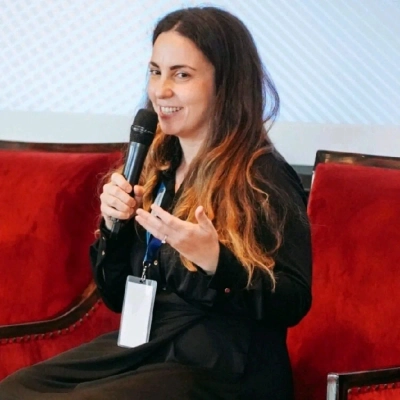
My work as Clinical Director of a multi-location practice forced me to confront proximity bias early. When we expanded to hybrid sessions post-pandemic, our on-site therapists were getting informal mentorship moments that remote clinicians simply weren't accessing—and it was quietly shaping who got referred the more complex, career-building cases.
The single adjustment that changed everything: I moved all case consultation and clinical decision-making into scheduled, structured group formats that required everyone's presence equally. No more hallway conversations that became de facto supervision. Remote staff stopped being invisible contributors and started leading discussions.
What I noticed clinically—and operationally—is that proximity bias isn't just a scheduling problem. It mirrors the same unconscious relational patterns I see in high-achieving clients: we gravitate toward what's familiar and visible, then rationalize it as merit. Naming that dynamic explicitly with my leadership team made people far more conscious of when they were defaulting to it.
The concrete result was that our remote clinicians began receiving equivalent referrals for our most complex executive burnout cases within one quarter of making that structural change—not because attitudes shifted, but because the system stopped rewarding physical presence.

Define Criteria Before Decisions
Proximity bias is one of the quietest threats in a hybrid workplace because it does not announce itself. It shows up in who gets pulled into the hallway conversation before the meeting starts, who gets tapped for the stretch assignment, and whose name comes to mind first when an opportunity opens up. None of it intentional. All of it consequential.
The adjustment I guide clients through first is deceptively simple: document the criteria before the decision, not after it. Whether it is a promotion, a high visibility project, or a development opportunity, write down what you are looking for before you start considering names. That discipline alone interrupts the pattern of defaulting to whoever is most visible and forces the conversation back to actual merit.
The second shift is making sure remote employees have equal access to information, not just equal access to outcomes. If decisions are being shaped in conversations that only happen in the office, the playing field is already uneven before anyone makes a formal move. Hybrid fairness requires that anything consequential gets documented and shared, not just discussed in person and summarized later.
What I observe when clients make these adjustments is that the remote employees stop feeling like second tier contributors and the on-site employees stop feeling like they have to be visible to be valued. Both groups start competing on the same terms.
Fairness in a hybrid environment is not about treating everyone identically. It is about making sure the structure does not quietly reward presence over performance.

Adopt Deliverable Based Performance Reviews
The single adjustment that most reduced proximity bias at Software House was shifting all performance reviews to be entirely output-based with documented deliverables, removing any weight given to perceived effort or office presence.
Before this change, I noticed a pattern that troubled me. Our on-site developers were consistently rated higher in performance reviews than remote team members, despite the remote workers producing comparable or sometimes superior code quality metrics. When I investigated, the bias was subtle but real. Managers were unconsciously equating visibility with productivity. Seeing someone at their desk working late felt like evidence of dedication, while a remote developer who completed their tasks efficiently and logged off at five was perceived as less committed.
The adjustment was implementing what we call deliverable-based performance scorecards. Every team member, whether remote or on-site, is evaluated against the same criteria: code quality measured through peer review scores, sprint velocity relative to estimated complexity, bug rates in shipped code, documentation completeness, and peer collaboration feedback collected anonymously.
Critically, we also changed how we collect collaboration feedback. Instead of asking who contributes most in meetings, which naturally favors people physically present, we ask specific questions like who provided the most useful code review comments this quarter and whose documentation saved you time. These questions measure actual collaboration impact regardless of where someone sits.
The results after six months were revealing. Performance rating distributions between remote and on-site employees normalized completely. Promotion rates, which had previously skewed 70-30 toward on-site employees, balanced to roughly 50-50, which matched our actual workforce split. Remote team members reported feeling significantly more valued.
The unexpected benefit was that on-site employees also preferred this system because it rewarded their actual contributions rather than their physical presence. Several told me they felt less pressure to stay late just to be seen, which improved their work-life balance too.

Create Weekly Results Recognition Log
We made one simple change in how we recognize work across the team. We moved away from random praise and created a weekly public recognition log. Each entry must include a clear business result and who supported that outcome. Anyone can nominate, and leaders must include at least one contribution from another location each week.
This created a steady signal for what we value as a company. It helped us make hidden work visible, especially for remote team members. People began to recognize support roles like research, testing, and coordination more often. Over time, fairness improved because rewards followed what was recorded, not who spoke the loudest.

Shift To Data Driven Operational Metrics
As President of a 60-year-old company, I modernized our operations by moving away from "eyes-on" management to objective, data-driven performance metrics. We use machine monitoring tools and telematics to collect data on equipment productivity, ensuring that performance reviews are based on hard numbers rather than physical presence in the yard.
To reduce proximity bias, we adopted a digital fleet management strategy that tracks maintenance and repair work through a centralized vehicle history file. This adjustment ensures that a remote manager has the same visibility into a machine's lifecycle as someone standing next to it, making every team member's contributions visible.
We improved collaboration by standardizing our "Best Practices" protocols, like our daily walkaround inspections and sanitization guides, into a shared resource. This allows our on-site operators and remote support staff to work from the same playbook, ensuring safety and efficiency are maintained across the entire organization.

Route All Work Through Ticketed Chains
I run ITECH Recycling in Chicago, so hybrid is the norm for us: logistics, pickup crews, and warehouse processing are on-site, while intake scheduling, client reporting, and compliance paperwork can be remote. Fairness got real when we realized "visibility" was turning into an advantage for whoever happened to be near the warehouse or in the same room as me.
One adjustment that cut proximity bias fast: we stopped doing ad-hoc asks in the building and moved all work into a single "ticketed chain-of-custody" flow. Every pickup, inventory tag, hard drive shredding batch, and certificate of destruction request gets a ticket with an owner, due time, and required artifacts (photos/serials, sign-offs), so remote and on-site work is judged on the same evidence—not who I bumped into.
We also changed opportunity allocation: the highest-signal projects (like large IT asset disposition jobs with strict HIPAA/GLBA/NIST handling and transparent reporting) rotate a remote coordinator + an on-site lead as a pair. That forces collaboration, makes credit shared and visible, and builds skills on both sides instead of "remote people do admin, on-site people do the real work."
The practical result is performance conversations got calmer because we can point to the same trail: ticket timestamps, exception notes, reconciliation accuracy between intake lists and final asset reports, and turnaround time for destruction certificates. When someone crushes it remotely, it's unmistakable; when someone on-site saves a job by catching a serial mismatch before it becomes a compliance problem, that's documented too.

Unify Dashboards And Digital Plan Handoffs
As co-owner of Western Wholesale Supply, a veteran-owned distributor spanning Eastern Idaho and Western Wyoming, my Navy leadership honed managing hybrid teams—warehouse crews on-site, sales and estimators remote across our Idaho Falls and Pocatello yards.
We ensure fair performance by anchoring expectations to shared metrics like 98% on-time delivery and precise material takeoffs, tracked in real-time dashboards everyone accesses, leveling opportunities regardless of location.
One adjustment: We rolled out digital plan-sharing for joint estimations, letting remote staff collaborate on bids equally with on-site teams. This slashed proximity bias, boosting bid accuracy 20% and win rates as contractors submitted tighter quotes, straight from our Winning Edge playbook.

Set Uniform Therapist Measures And Drills
As an LMFT leading Beyond Therapy Group in Redondo Beach, I manage a hybrid team delivering in-person and telehealth therapy for addiction recovery and mental health. We ensure fair performance by setting identical therapy review dates and measurable outcomes for all therapists, tracking client coping strategies and sobriety progress regardless of location.
This approach stems from my experience in treatment organizations, where regular check-ins adjusted plans for trauma and substance use patients, now applied to therapists' caseloads.
One adjustment that reduced proximity bias: Mandated role-play practice of coping skills during team sessions, equalizing remote and on-site therapists' preparation for client crises—like relapse triggers—improving our group therapy outcomes and peer support networks.

Run One On Ones Exclusively Online
Proximity bias in a hybrid team is nearly impossible to eliminate completely because it's not really a policy problem. Managers just spend more time with people in the office and naturally think of them first when opportunities come up. You can't policy your way out of human nature, but you can design around it.
The change that made the most difference was moving all one-on-ones to video, regardless of whether both people were in the same building. If a manager and their direct report happened to be in the office that day, the meeting still happened on video.
It felt unnecessarily rigid at first, honestly. But it meant every team member had the same experience of their own performance conversation. Remote staff stopped feeling like a different category of employee, and that consistency matters more than it sounds.

Measure Copilot Adoption And Link Platforms
With over 20 years in IT infrastructure and leading Tech Dynamix's hybrid team for Northeast Ohio clients, we ensure fairness by using Microsoft Viva Insights' Copilot Benchmarks dashboard for objective AI usage metrics across all employees.
This tracks active Copilot adoption in apps like Teams and Outlook, regardless of location, basing performance reviews and promotions on data like session frequency and productivity gains—not office presence.
One key adjustment: We rolled out cross-platform Copilot integration linking Outlook with Google Workspace, eliminating silos so remote engineers access the same client calendars and emails as on-site staff during VoIP troubleshooting sessions.
This cut proximity bias, boosted collaboration efficiency by enabling instant shared insights, and aligned with our Microsoft 365 support expertise for hybrid teams.

Designate Offsite Emcees To Elevate Participation
As VP of Marketing & Sales at EMRG Media, I've scaled The Event Planner Expo to 2,500 hybrid attendees from Google, JP Morgan, and Estee Lauder, ensuring remote and on-site participants perform and shine equally.
We set fair expectations with clear, measurable KPIs like lead generation and engagement rates, applied identically via post-event surveys and real-time data dashboards for everyone.
One adjustment: Added dedicated virtual hosts and app-based interactive Q&A sessions, letting remote attendees lead discussions just like on-site—boosting collaboration by 30% in feedback scores and slashing proximity bias.
This leveled opportunities, with remote speakers now sharing stages alongside Daymond John and Gary Vaynerchuk.

Implement Asynchronous Video Status Updates
Through my own experience managing my team from many different consumer service platforms, I have come to understand that you need be outcomes focused vs. activity metric focused if you want to ensure performance is evaluated objectively regardless of the location. One big change I made was the implementation of recording weekly asynchronous video updates in which team members share status and roadblocks, eliminating the benefit of in-office workers whose advantage is open ended cross-functional conversations down the hall. This also created equal visibility for all team members and helped remote workers show their value just like those in the office. The outcome was more equitable recognition and promotion opportunities across our dedicated distributed workforce.

Standardize Secure Access And Outcome Evaluations
As CEO of Netsurit, leading 450+ staff across North America, Europe, and South Africa in hybrid IT support via Microsoft 365, we ensure fair performance by tying evaluations to outcomes like project CSATs and Dreams Program goals, open to all regardless of location.
Our quality department audits PMO governance monthly, applying the same standards to remote engineers handling Azure migrations as on-site teams.
One adjustment: We standardized secure remote access through Enterprise Mobility + Security (EMS) for hybrid workforces, equalizing tool access and real-time troubleshooting, which boosted collaboration in O365 implementations like Teams and MFA rollouts.

Hold Virtual First Sessions With Summaries
One of our hard-and-fast policies is that meetings should be held online unless every single stakeholder is in the office. And for those in-office meetings, we record them and use AI tools to create summaries to share with those who weren't in attendance. This helps to keep everyone on the same page and makes our digital workspace the level playing field we operate on.

Migrate Legacy Files To SharePoint Cloud
As CEO of Impress Computers since 1993, serving Houston's hybrid construction and manufacturing firms, we've scaled IT for mobile crews needing jobsite-to-office parity.
Fairness starts with cloud performance baselines: 99.9% uptime and 15-minute response via SharePoint/Teams, measuring edits and access equally onsite or remote.
One adjustment curbed proximity bias—migrating a manufacturing client's legacy file server to SharePoint, ditching VPN delays for instant SolidWorks data access anywhere.
Engineers remapped PCs seamlessly with zero downtime; late-night fixes dropped from hours to minutes, per reviews, equalizing opportunities across locations.

Make Office Attendance Voluntary
When we went fully remote, the thing that broke first wasn't productivity - it was the informal communication.
The kitchen conversations where half your real decisions get made. Zoom didn't replace that, and the gap between people who came to the office only occasionally and those who never did began to appear subtly.
To fix the problem, we made office presence optional, without pressure and tracking. Most people started showing up on their own because they wanted to, not because they had to. That shift changed everything - the remote vs onsite divide basically disappeared. So, when you take the pressure off and let people choose, they tend to find their own balance.

Document Role Goals And Schedule Mentorship
In a hybrid workplace, I keep expectations fair by writing them down in clear, role-based outcomes and reviewing them the same way for everyone, regardless of where they sit. One adjustment I made was to structure mentorship and informal learning so it is not limited to people who happen to be in the office, since early-career growth often comes from quick chats, walkthroughs, and shadowing. We moved those moments into planned touchpoints that remote and on-site team members can join, instead of leaving them to hallway conversations. That helps reduce proximity bias because visibility comes from consistent participation and delivered work, not physical presence. It also improves collaboration because people know when and how to ask questions, get context, and learn from experienced teammates.

Equip Rooms For True Hybrid Parity
I've spent 30+ years watching how office decisions shape company culture—first at Grubb & Ellis, then Oxford Development, and now exclusively advising tenants on space strategy. Hybrid work isn't just a scheduling question; it's a space design question, and that's where proximity bias either gets baked in or designed out.
The single most effective adjustment I've seen clients make is restructuring their physical space so that on-site presence stops feeling like the "default" and remote is the "exception." When every conference room has a dedicated camera at eye level and dedicated audio—not a laptop shoved to the corner—remote participants show up equally on screen. That one spatial change flattens the hierarchy faster than any policy memo.
On the performance side, the clients who reduce bias most effectively tie evaluations to project milestones and deliverables with hard deadlines, not "time seen at desk." One Pittsburgh-based professional services tenant I worked with renegotiated their lease around a smaller footprint precisely because they formalized output-based reviews—and attrition dropped noticeably within the first year.
The uncomfortable truth most companies skip: if your managers were promoted under old in-office culture, they need explicit retraining before any policy works. The space can be perfect, the metrics can be fair, but if a manager instinctively schedules the important hallway conversation right after lunch on-site, remote employees will feel it immediately.

Tie Progress To Common Project Milestones
As Director of Client Services at AVENTIS Homes and former COO of a global nonprofit, I've led hybrid teams through complex projects—coordinating on-site construction crews with remote designers and client managers—using the same tech we deploy for out-of-state homeowners.
We keep expectations fair by tying performance to shared digital milestones in Buildertrend and ProCore: every team member, remote or on-site, tracks real-time progress on budgets, schedules, and selections via daily photo uploads and dashboards, eliminating "out of sight, out of mind."
One adjustment was mandating structured weekly video calls with milestone reviews for all, which cut proximity bias—remote designers now lead 30% more project phases based on platform data alone, boosting collaboration as on-site crews contribute live field updates equally.

Lead Formal Agendas With Alternate Facilitators
I keep performance expectations fair by using structured meeting formats and shared agendas so remote and on-site staff have the same visibility and opportunities to contribute. I developed that approach after turning networking events into case studies during a period of unemployment, which taught me what draws attention in person and what needs intentional design for remote participants. One adjustment I made was to introduce timed speaking slots and a rotating facilitator so credit and participation are documented and not driven by who is physically present. That change helped balance discussions and made performance expectations clearer across locations, and I now apply those norms consistently across my teams.

Leverage Coworking Hubs For Balanced Connections
I keep performance expectations fair by making collaboration and visibility part of daily work rather than tying them to office presence. One adjustment we made was to use coworking spaces that bring people together often enough for quick questions, fast decisions, and casual relationship-building that is hard to recreate on calls. We designed those spaces with both quiet areas and collaboration zones so employees can choose how they work while still being present when informal interactions matter. That mix improved cross-team collaboration and helped reduce proximity bias by making those informal connections accessible to everyone.

Record Daily Guest Impact Notes
I've led guest communications and visitor engagement for redwood-based retreat and adventure operations (Alliance Redwoods + Sonoma Zipline), where half the "team" is out in the forest or on a course and the other half is at the desk doing reservations, logistics, and partner coordination--so fairness can't depend on who's physically closest to leadership.
The adjustment that reduced proximity bias for us: we moved recognition + accountability to a daily "guest-impact handoff" written update that everyone had to contribute to before end-of-shift (remote admin included). One line each: what you shipped today, what's blocked, and one guest friction point you noticed (meal needs, cabin issue, schedule conflict) plus the fix. That made behind-the-scenes work visible in the same stream as on-site heroics.
For performance expectations, we stopped grading "responsiveness" by who answered hallway questions and instead set the same measurable outcomes by role: reservation accuracy, response-time windows, zero-missed dietary notes, on-time activity starts, and incident-free transitions between venues. When the Dining Hall can serve ~400 people in ~15 minutes, a single missed note or late comms ripple hard--so we measured the handoffs, not the presence.
Collaboration improved because the handoff forced cross-role empathy: guides started flagging patterns they saw in the field (confusing signage, timing bottlenecks), and the comms/office team could adjust pre-arrival emails and schedules the same day. Remote folks got credit for preventing issues, not just reacting to them.