

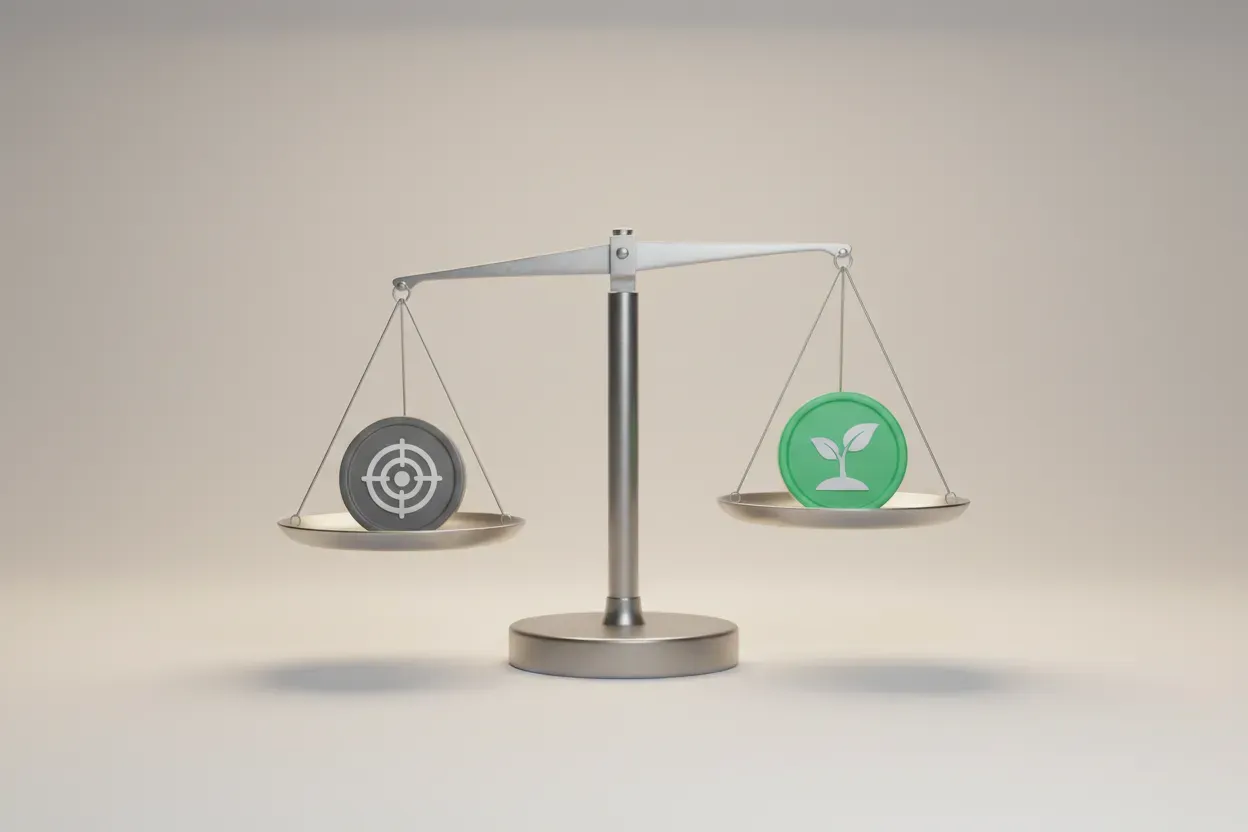
How HR and Managers Turn Underperformance Into Improvement
Underperformance doesn't have to mean the end of the road for an employee. This article brings together insights from HR professionals and management experts who have successfully turned struggling team members into strong contributors. The following strategies provide practical steps for addressing performance gaps with clarity, accountability, and a genuine commitment to improvement.
- Define Success and Share Responsibility
- Open with Stakes and Candor
- Clarify Wins and Grant Authority
- Separate Standard from Story
- Use Collaborative Improvement Plans
- Turn Vague Concerns into Measurable Milestones
- Coauthor a Clear Scorecard
- Validate Causes before You Assign Blame
- Start with Curiosity Then Act
- Probe First and Diagnose Workload
- Anchor Expectations to Objective Tests
- Eliminate Review Surprises
- Address Issues Directly with Care
- Ask What Is Needed and Require Ownership
- Tie Work to Service Promises
- Link KPIs to Mentorship
- Pair Hard Metrics with Guidance
- Set Targets and Rehearse Skills
- Create Clarity and Guard Collaboration
- Invite Input and Commit Decisions
- Resolve Root Issues and Recalibrate Goals
- Specify Gap and Spotlight One Behavior
Define Success and Share Responsibility
Supervisors are responsible for the development and the success of their employees. While supervisors may not be able to fully control all outcomes, it is their role to ensure that those that they manage understand their roles, have been given expectations and that they feel supported in achieving their objectives.
The employee is responsible for driving their own development. They must be proactive, take initiative, and ask for feedback and guidance. The supervisor is there to help shepherd the employee's development and identify additional resources to support the employee along their development journey. It is the responsibility of the supervisor to define success and to set clear expectations with the employee. It is also the supervisor's responsibility to share with the employee when those expectations are not being met and provide clear actionable guidance on what needs to change - and how.
When giving feedback in performance conversations, it is important for supervisors to remember their responsibility to develop their staff. When I have shared with an employee that they are not meeting their goals, I will then ask them, "What are WE going to do about this?" and "How can I help you make this happen?" By making the employee's development a challenge for both of us to tackle together, I have built trust and demonstrated support - and also have committed that we will hold each other accountable to achieving the desired results.

Open with Stakes and Candor
Underperformance conversations go wrong when you try to be "nice."
Early on, I'd soften everything. I'd circle the issue, talk about potential, mention a few positives first. I thought I was being supportive. What I was actually doing was creating ambiguity. The employee would leave thinking, "Okay, I'll try a bit harder," while I'd leave thinking, "That was serious."
That gap is where resentment grows.
One conversation changed how I handle this.
We had a team member who was clearly capable but missing deadlines consistently. Quality was fine. Reliability wasn't. I scheduled what I thought would be a standard performance discussion.
Instead of starting with feedback, I made one decision differently: I opened with the stakes.
I said, very plainly, "Right now, this role isn't working at the level the company needs. If nothing changes, we won't be able to continue in this structure. I don't want that outcome. So let's figure out what's actually happening."
There was a long pause.
Then the real issue came out. They weren't struggling with the work itself — they were overwhelmed by how reactive the role had become. They were spending 60% of their time in Slack, firefighting small things, and then trying to do deep work at night. Deadlines slipped because focus was fragmented.
If I had stayed vague, we never would've gotten there.
Balancing accountability with support isn't about tone. It's about clarity first, empathy second. When someone understands the seriousness of the situation, they can engage honestly. Without that, they defend.
What changed the outcome was separating the person from the system. I made it clear: "You're not failing as a person. The current setup is failing you — and us. Let's redesign it or decide if this is the right seat."
We restructured the role, reduced reactive tasks, and set measurable commitments around output. Within two months, performance improved significantly.
The insight for me was this: support without standards is indulgence. Standards without support is cruelty. But when you're explicit about both — "This must change" and "I'm willing to help you change it" — you give people a real choice.
And adults do better when they're treated like adults.

Clarify Wins and Grant Authority
I fired someone twice from the same role, then rehired them a third time and they became one of my best operators. Sounds insane, but here's what happened.
When I was scaling my fulfillment company, I had a warehouse manager who kept missing KPIs. Orders were shipping late, inventory counts were off, and I was getting customer complaints. First time, I let him go. Clean cut. Three weeks later, I realized I'd never actually told him what success looked like in concrete terms. I'd said "improve accuracy" but never defined that 99.2% inventory accuracy was the standard or showed him the dashboard where he could track it daily.
I brought him back with a different approach. We built a weekly scorecard together. Not my metrics imposed on him, but we co-created what mattered and why. Turns out he thought speed was the priority because that's what I'd emphasized in interviews. I wanted accuracy first, speed second. We were optimizing for different goals and I'd never clarified that.
He still struggled, so I let him go again. But this time I asked a different question during the exit conversation: "What would you need to actually win at this?" His answer floored me. He said he needed authority to pause operations when he spotted systemic issues instead of just firefighting. I'd been undermining him by jumping in to fix problems myself instead of letting him own solutions.
Third time, I gave him that authority and committed to not swooping in for 30 days unless he asked. He turned the operation around completely. Accuracy hit 99.4%, late shipments dropped by 60%, and he eventually managed a team of 40.
The decision that changed everything was moving from "here's what you did wrong" to "here's what winning looks like, and what do you need from me to get there?" Most underperformance isn't about effort. It's about misaligned expectations or missing resources. If you can't articulate what success looks like in numbers and give someone the tools to hit those numbers, you're setting them up to fail. And sometimes the missing tool is just you getting out of their way.

Separate Standard from Story
I'm Ben Toscano—Omaha native, co-owner of Gateway Auto (founded 2002). We've helped 15k+ customers, created 34 local jobs, and run separate expert teams (ASE/I-CAR), so "underperformance" shows up fast in comebacks, cycle time, and customer trust.
I balance it by separating *standard* from *story*: the standard is non-negotiable (quality, safety, transparency), and the support is "let's remove friction so you can hit it." In the conversation I use our digital inspection expectations as the backbone—every recommendation must have clear notes + photos/video, and every customer concern must be written back in plain language—then I ask what's breaking: skill, pace, confidence, or process.
One decision that changed an outcome: I stopped doing the talk in my office and did a 30-minute "ride-along" on their next car. We listened to the customer description first, watched their visual inspection step-by-step, and compared their write-up to our diagnostic flow (codes - inspection - functional test - options + estimate); they weren't lazy—they were skipping the "explain it like a human" part because they felt rushed.
Accountability was a 2-week, black-and-white target: 100% complete digital inspections + zero "surprise" add-ons without approval; support was: I personally rewrote two of their estimates with them and had a lead tech review their next five before sending. Their comeback rate dropped, their confidence went up, and the biggest change was customers starting to say, "I finally understand what's going on with my car."

Use Collaborative Improvement Plans
When an employee is pressured to produce more without support, this will not work well for them. Likewise, if an employee has support but no accountability, that will not work very well either. To find the balance between the two, performance improvement plans should not be thought of as a countdown to termination; instead, view them as a collaborative plan for meeting specific goals as a company. The intent of performance improvement plans is not to provide a list of failures; rather, they should provide an outline of the particular technical or process gaps that exist and what resources are needed to resolve those gaps.
I had the experience of managing a developer who missed every single delivery date and withdrew from the team. During the initial performance improvement review, I chose not to give him a general warning that he had to improve his performance during this 30-day period, but rather I created a detailed sprint plan for the 30 days. The breakthrough for him occurred when he revealed to me that he felt completely lost in the legacy code base that he had been asked to build against. We had sent him off to build things without giving him the proper plans to accomplish that task. Once I assigned him a dedicated mentor to help him navigate through this particular application architecture, his productivity not only came back; it doubled. This change in his work perspective helped him to feel like he was a valued member of the team instead of being treated like a line item on a ledger sheet.
Performance reviews will never be easy because they involve people's financial security and professional identity. When approaching performance reviews with a mindset of helping the employee succeed instead of assuming the employee is acting with negligence, you will build the trust that is needed for you to help the employee improve their performance.

Turn Vague Concerns into Measurable Milestones
As the founder and CEO of a premium furniture company, I work closely with a small team where underperformance is visible quickly and can affect everything from production timelines to customer experience. I have learned that the best performance conversations are honest enough to create urgency, but specific enough to give the person a real path forward. When someone is struggling, I do not soften the standard, but I make the problem concrete: what is not working, where the gap shows up, and what improvement looks like over the next two to four weeks. One decision that changed an outcome for me was stopping a vague conversation about "initiative" and replacing it with a written 30-day reset plan with three measurable targets and one weekly check-in. In one case, a team member who was missing internal deadlines improved on-time task delivery from about 60% to over 90% within a month because the conversation moved from emotion to clarity. "People usually do better when they can see the win clearly, not when they are left guessing what good looks like."

Coauthor a Clear Scorecard
One decision that changed our outcome was to stop debating effort and co-write a simple scorecard together. The employee felt they were doing well because they stayed busy most of the time. We saw that our feedback was too general and not clear enough. So we asked them to define success in their own words, and then we turned that into three weekly indicators linked to the role and business goals.
In the same conversation, we made a clear commitment to support them with regular feedback. We agreed to review their work every Tuesday for four weeks and give feedback on the same day. This removed the guesswork that was causing rework and stress in their work. Within two weeks, the numbers improved and their confidence returned as visibility became clear.

Validate Causes before You Assign Blame
The most important performance conversation I ever had was with an account lead who had recently spearheaded a high-profile project — a branding/rebranding campaign for a well-known legacy Americana brand. The campaign apparently went horribly wrong. The Internet lit up with calls for a boycott, the brand put the campaign on hold, and the client leadership was upset. The campaign lead was being evaluated for a strong underperformance rating due to an allegedly catastrophic misunderstanding of the marketplace and unacceptable offense to the customer base.
Initially, I thought we should hold them strictly accountable. But to truly support someone, you must ensure you're holding them accountable to reality, not to an artificially/politically/algorithmically driven construct. The real key was to NOT discipline them until we could ascertain the true cause of this failure. Instead of putting them on a PIP, I asked to walk through the outrage with them and do a forensic dive on the data.
By analyzing the social media reactions using tools like PeakMetrics, we sampled thousands of comments in the first 24 hours of the campaign launch and found that a significant portion of the negative sentiment was driven by bots — in fact, as much as 70% of the negative comments were using identical messaging. This was a coordinated, artificially accelerated culture war attack. Therefore, the campaign lead was not incompetent but targeted by bot-driven negativity.
Once this was understood, accountability was redirected toward how we might adapt the campaign strategy, and real support came from educating the client leadership that the digital backlash didn't reflect offline consumer behavior — bots don't visit restaurants, for example. We validated through in-person customer surveys that the rebranding helped with the client's underlying business problem (e.g., declining restaurant foot traffic). By using data to keep us honest, this fantastic employee was protected from inappropriate discipline, and we avoided a nasty business decision by the client.
So, from an HR leader or executive responsible for heavily digitized teams, remember: when all the data points in the metrics dashboard or tweet volume suggest massive underperformance, start with face-to-face conversations and verify the source of the failure so that you hold them accountable for reality, not for an artificial outcome.

Start with Curiosity Then Act
We built our entire system around catching underperformance before it becomes a problem—not after.
Every EA at DonnaPro has a Quality Manager who reviews their work regularly. Not as a surveillance thing but as a support structure. Weekly reports, monthly reports, bi-weekly one-on-ones. By the time something shows up as "underperformance" in most companies, we've usually already spotted the early signs and intervened.
The one decision that changed outcomes for us was separating the accountability conversation from the support conversation. Early on, when an EA was struggling, their manager would try to do both at once—"here's what's wrong, and here's how we'll help you fix it." That doesn't work. The person gets defensive and stops listening after the first part.
Now our Quality Managers lead with curiosity first. What's going on? Is the client relationship changing? Are you overwhelmed, undertrained on something, dealing with personal stuff that's affecting focus? Nine times out of ten the EA already knows something is off—they just didn't feel safe raising it.
Once we understand the actual root cause, then we build a concrete plan together. Maybe they need coaching on a specific skill. Maybe the client workload shifted and needs rebalancing. Maybe they just need someone to acknowledge that a particular client is genuinely difficult and strategize around it.
The EAs who've turned things around fastest are always the ones where we caught it early and approached it as a problem to solve together rather than a failure to punish. Accountability without support creates fear. Support without accountability creates complacency. You need both but the order matters.

Probe First and Diagnose Workload
We had someone on the team who was missing deadlines by 2 or 3 days consistently. Not dramatically bad. Just enough to slow things down. The easy move would have been a formal warning. Instead I asked if they wanted to walk me through their typical workday. Turns out they were spending about 40% of their time on tasks they had inherited from someone who left. Nobody had reassigned that work properly. The performance issue was actually a workload distribution issue that we had missed.
I think the decision that changed things was simply asking before telling. It sounds basic but the default in most companies is to lead with accountability and add support later. Reversing that order made the person feel like we were solving a problem together rather than putting them on trial.

Anchor Expectations to Objective Tests
As the leader of a WBENC-certified firm serving 500+ clients annually, I rely on a team with an average of 15 years of experience to maintain our reputation for reliability. I balance accountability by using our strict "clean, decontaminated, and functional" rental return policy as an objective metric, ensuring every technician knows exactly what success looks like without personal bias.
When a technician struggled with the precision required for calibrating water quality meters, I chose to pivot from a formal warning to a diagnostic-heavy assignment. I had them lead a series of performance tests on Grundfos SQ pumps, where they could see exactly how minor calibration errors lead to total mechanical failure in high-stakes water management systems.
This shift to hands-on "cause-and-effect" learning helped the employee internalize the importance of NIST-traceable accuracy by seeing the real-world impact on the equipment. By focusing on the technical nuances of variable speed motor technology, their error rate on subsequent pH buffer calibrations dropped to zero, protecting our status as a preferred distributor for leading environmental brands.

Eliminate Review Surprises
Performance reviews fail when they are treated as an annual event instead of a ongoing conversation with a formal checkpoint at the end.
The single most impactful change I guide clients through is eliminating the element of surprise. If an employee hears something significant in their review that they are learning for the first time, the review process has already failed. Feedback delivered once a year is not feedback. It is a verdict. And nobody grows from a verdict they never saw coming.
The structural change that transforms the quality of those conversations is simple: require managers to document meaningful feedback in real time throughout the year and reference it at review time. Not a surveillance system. A running record of moments worth acknowledging, course corrections worth capturing, and growth worth naming out loud. By the time the formal review arrives both the manager and the employee are looking at a shared body of evidence instead of a manager's selective memory from the last thirty days.
What I observe when this is done well is that the review conversation shifts from evaluation to reflection. The employee arrives prepared. The manager arrives with specifics. The conversation moves faster, lands harder, and actually goes somewhere instead of circling the same vague talking points about communication skills and taking initiative.
The other change worth making is separating compensation conversations from development conversations. When salary is on the table employees cannot hear anything else. Give growth its own space and it will actually take root.
Reviews should make people feel seen, not sentenced.

Address Issues Directly with Care
Having a direct conversation with an underperforming employee is one of the most important things you can do for your business. Until you clearly tell someone their performance is off the mark, they won't know it isn't meeting expectations.
When these conversations are done well, they can transform an underperforming employee into a stronger contributor, and sometimes a leader. I worked with a team of service industry shift leaders where one member consistently displayed an attitude that coworkers and customers perceived as negative and judgmental. Everyone assumed they simply didn't want to be there. Before scheduling any conversation, our management team documented the specific patterns we had observed, including dates, the behaviors that fell short, and what the correct behavior looked like. That preparation was the turning point. It kept the conversation focused on specific examples rather than impressions.
The tone of this kind of meeting should be one of care and concern. Including at least two supervisory employees keeps the conversation moving forward and reduces awkward tension. I opened by thanking the employee for their time, shared that we were there to talk about performance, and made clear that our goal was to understand what support they might need. I asked how they were doing outside of work and whether any outside resources might help. In this case, she was receptive and ready to make changes.
If an employee isn't receptive, that's important information too. The conversation shifts to whether the role is the right fit, while still being explicit that current performance can't continue and that continued employment depends on improvement.
Showing care, having a real conversation, and being explicitly clear about what performance is expected will make your employee feel seen, heard, and supported. This level of care inspires underperforming employees to improve, learn, grow, and sometimes even work towards moving into a leadership position themselves.

Ask What Is Needed and Require Ownership
If a worker's job performance is not up to the mark, I base my first step on the facts only. Then I follow up with a question: What do you need from me to get this problem solved? Besides holding the employee responsible, this question also communicates that I am ready to offer help.
Initially, I would figure out the solution and give the employee the fix. However, it hardly made an impact. Later, I asked an underperforming employee to return with his own plan of action. Not only did he single out a blockage that I had overlooked, but he also took responsibility for the solution. His results were on a par with previous performance in only a few weeks. Genuine accountability leads to ownership, while genuine support involves providing the right tools. It is by doing that that we at DeWitt Pharma create stronger teams.

Tie Work to Service Promises
Managing properties across Southwest Montana requires hitting hard targets like our 98% occupancy rate and 48-hour maintenance response guarantee. I balance accountability by anchoring every conversation to these specific service promises, ensuring the team knows exactly how their work protects a landlord's investment.
Support comes through providing the same modern technology we offer clients, such as our automated maintenance request systems, to remove manual friction from daily tasks. I make sure my team has 24/7 access to our vetted local contractor network so they never feel stranded when handling an emergency repair in Big Sky or Bozeman.
One decision that improved a performance outcome was shifting a team member's focus to our "2-4 week tenant placement" benchmark rather than general marketing efforts. By providing professional-grade listing tools and a clear timeline, we moved them from being overwhelmed to consistently hitting the metrics that keep our vacancy rates below 2%.

Link KPIs to Mentorship
As a former Navy helicopter pilot and ops leader at our third-gen supply business, I set crystal-clear KPIs—like 98% on-time delivery matching our USP—then back it with targeted tools and veteran mentorship to build execution discipline.
One warehouse lead was underperforming on material staging, causing 20% delays that risked our 4.9-star customer service rating from contractors like Figueroa Drywall.
In the performance talk, I shifted from discipline to decision: paired him with Dusty for a week on precision estimation takeoffs using the USG Sheetrock Estimator from our resources, linking staging errors directly to bid losses in East Idaho's market.
His staging accuracy jumped to 100%, slashing delays and winning us a major acoustical ceiling contract via flawless partnering.

Pair Hard Metrics with Guidance
With over 15 years leading sales and operations teams in home health and caregiver services, I've built high-performing groups at Reliant at Home and Lucent by blending firm metrics with targeted coaching.
Accountability starts with data-driven KPIs like 20% quarterly referral growth and compliance audits; support means weekly one-on-ones and pairing with top performers for real-time feedback.
As Executive Director of Sales Operations at Reliant, a regional sales director was missing hospice targets by 25%. In our convo, I handed her ownership of a new Texas payer network pilot with full access to our CRM dashboard—she exceeded goals by 40% in six months, boosting service line revenue.
This shifted her from defensive to driven, a model I've used to optimize caregiver teams at Lucent too.

Set Targets and Rehearse Skills
As CEO of National Technical Institute, training HVAC, plumbing, and electrical techs for direct job placement, I've led performance turnarounds by applying the customer service and communication standards we teach daily.
Accountability starts with clear, non-negotiable goals like punctual class starts and jargon-free explanations; support pairs it with role-playing sessions from our curriculum, ensuring they master simple breakdowns of coil cleaning or ductwork issues.
In one conversation with a plumbing instructor whose students struggled with client interactions, I decided to video-record a live demo of him explaining a leak fix in plain terms, then reviewed it together—his student satisfaction scores jumped 30% next quarter.

Create Clarity and Guard Collaboration
I balance accountability and support by setting clear, role-specific standards while protecting structured time for collaboration so expectations are transparent and help is available. In one performance conversation with an implementation team member whose work suffered from misaligned schedules, I decided we would adopt fixed overlap windows between Sales and Implementation and clarified who owned each handoff. That decision reduced confusion at service delivery and made commitments to customers more accurate. It held the individual to clear collaboration standards while giving them the predictable support needed to improve, which I view as the fairest approach.

Invite Input and Commit Decisions
I balance accountability and support by making performance conversations safe: I ask for the employee's input early, give credit where it is due, and commit to a direct response so they do not feel ignored. In one conversation I chose to invite their perspective up front, publicly acknowledge their contributions, and then respond to their suggestions with a clear yes, no, or when. We followed that with a quick friction review and leadership agreed to own the fixes and the next steps. That decision led to faster problem solving, fewer repeated mistakes, and more initiative from the employee.

Resolve Root Issues and Recalibrate Goals
First, you should always discuss with the employee the issues that are reducing their effectiveness - sometimes it's simply computer problems, a lack of necessary software, or even a poorly functioning air conditioner. You need to find the root cause of the problem and try to fix it. It's important to understand that sometimes low results are due to overly ambitious goals that are simply unachievable. This is very demotivating for the team, as they already know the goals are simply unachievable. So, the algorithm for improving effectiveness is very simple: fix the main problem, check the adequacy of the goal, and monitor changes.

Specify Gap and Spotlight One Behavior
Provide support while holding people accountable by clarifying what the performance gap is, why it matters, and what you expect to happen next. This is far more effective than providing vague feedback. When you explain what was missed, how it impacted the team, and what good looks like, you provide the employee with something tangible upon which to act.
A significant decision that positively impacted the outcome was to limit the conversation to just one behavior versus overloading the discussion with every problem at once. This allowed the employee to focus on improving their performance related to that problem and provided a regular rhythm for follow-up on progress, resulting in their relevance and appropriateness in devoting effort to improvement.
