
How Market Research Psychology Can Transform Your Hiring Success Rate
Authored by: Scott Brown
The hiring landscape has become increasingly complex, with companies struggling to find the right talent while candidates navigate a competitive job market. Traditional hiring methods often fall short, leaving HR professionals frustrated with high turnover rates and poor cultural fits. However, there's an untapped resource that can revolutionize your recruitment strategy: market research psychology.
Having spent over a decade in the market research industry and previously founded resume distribution services that connected thousands of candidates with employers, I've witnessed firsthand how understanding human psychology can dramatically improve hiring outcomes. The same principles that drive successful market research—understanding motivations, predicting behaviors, and identifying genuine preferences—can be applied to transform your hiring process.
The Psychology Behind Successful Market Research
Market research succeeds because it goes beyond surface-level responses to understand the psychological drivers behind human behavior. In my experience running FocusGroupPlacement.com and other consumer research platforms, I've observed that the most valuable insights come from understanding what people truly want versus what they say they want.
This same principle applies to hiring. Candidates often provide rehearsed answers during interviews, while employers focus on surface-level qualifications rather than deeper psychological compatibility. Market research psychology teaches us to look for inconsistencies, probe deeper motivations, and identify authentic responses through carefully structured questioning techniques.
The key lies in understanding cognitive biases that affect both candidates and hiring managers. Confirmation bias leads interviewers to favor candidates who confirm their preconceptions, while the halo effect causes one positive trait to overshadow potential red flags. Market researchers are trained to recognize and counteract these biases through structured methodologies—skills that translate directly to more objective hiring decisions.
Applying Research Segmentation to Candidate Evaluation
One of the most powerful tools in market research is segmentation—dividing populations into distinct groups based on shared characteristics, behaviors, or motivations. This approach can revolutionize how you evaluate candidates by moving beyond simple qualifications to understand deeper compatibility factors.
Start by segmenting your ideal candidates based on psychological profiles rather than just skills. Consider factors like problem-solving approaches, communication styles, risk tolerance, and collaboration preferences. During my time integrating ResumeDirector and ResumeArrow into LiveCareer, I noticed that the most successful placements occurred when there was alignment between a candidate's work style and the company's operational culture, not just their technical abilities.
Create candidate personas similar to customer personas in marketing. For example, you might identify "The Analytical Innovator" who thrives in data-driven environments but needs creative freedom, or "The Collaborative Executor" who excels in team settings but struggles with ambiguous objectives. These psychological profiles help you ask better questions and evaluate responses more effectively.
Structured Interview Techniques from Focus Group Methodology
Focus groups succeed because they use proven psychological techniques to extract honest, detailed responses from participants. These same methodologies can transform your interview process from a surface-level conversation into a deep psychological assessment.
Implement the "laddering technique" used in qualitative research, where you ask "why" questions in sequence to uncover underlying motivations. Instead of asking "Why do you want this job?" follow up with "What about that appeals to you?" and "How does that align with your long-term goals?" This reveals authentic motivations beyond prepared responses.
Use projective techniques borrowed from psychological research. Ask candidates to describe how a previous colleague would characterize their work style, or how they would approach a hypothetical scenario involving team conflict. These indirect questions bypass social desirability bias and reveal more authentic personality traits.
Create controlled comparison scenarios similar to A/B testing in market research. Present candidates with two different approaches to solving a work-related problem and ask them to explain their preference. Their reasoning process reveals more about their psychological makeup than their actual choice.
Leveraging Behavioral Prediction Models
Market research relies heavily on predictive modeling to forecast consumer behavior. The same statistical approaches can predict candidate success and longevity with remarkable accuracy when applied correctly.
Track psychological indicators that correlate with success in your specific organizational culture. Through my work connecting people with research opportunities, I've observed that certain personality traits consistently predict engagement and completion rates. Similarly, you can identify which psychological characteristics predict success in your work environment.
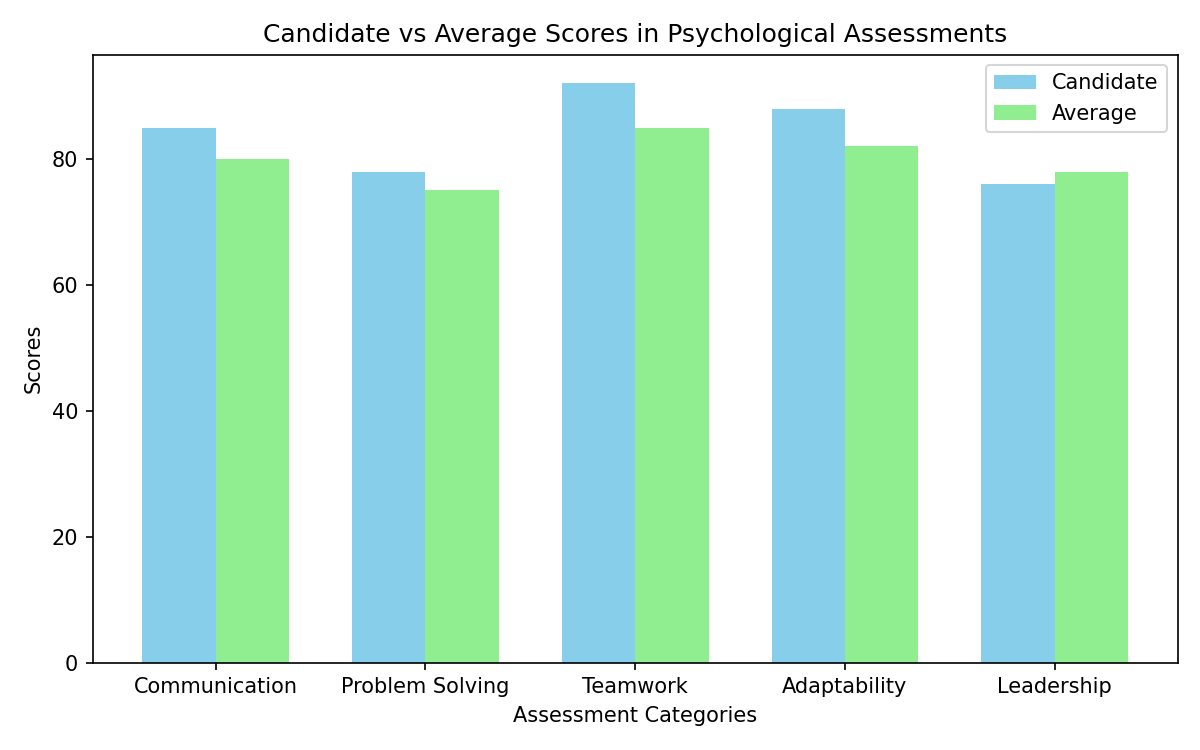
Develop scoring matrices that weight psychological compatibility alongside technical qualifications. Consider factors like adaptability (how well do they handle unexpected changes?), intrinsic motivation (what drives them beyond external rewards?), and cultural alignment (do their values match your organization's principles?).
Use follow-up assessments similar to market research validation studies. Contact new hires at 30, 60, and 90-day intervals with brief psychological assessments to validate your hiring predictions and refine your evaluation criteria.
Overcoming Common Hiring Biases Through Research Principles
Market researchers are trained to identify and eliminate biases that skew results. These same principles can eliminate hiring biases that lead to poor decisions and reduced diversity.
Implement blind evaluation techniques for initial screening. Remove identifying information that triggers unconscious bias—names, graduation years, even specific company names—and focus purely on psychological indicators and relevant experience. This approach, similar to blind taste tests in consumer research, often reveals overlooked talent.
Use structured decision-making frameworks borrowed from research methodology. Create standardized evaluation criteria with weighted scoring systems that prioritize psychological fit alongside technical qualifications. This reduces the influence of interviewer mood, personal preferences, and other subjective factors.
Establish validation protocols similar to research quality control. Have multiple team members independently evaluate the same candidate responses, then compare scores to identify inconsistencies that might indicate bias or overlooked factors.
Measuring and Optimizing Your Hiring Success Rate
The most successful market research programs continuously measure and optimize their methodologies. Apply this same analytical rigor to your hiring process to achieve measurable improvements in success rates.
Define clear success metrics that go beyond traditional measures like time-to-hire. Track psychological alignment indicators such as 90-day performance ratings, cultural integration assessments, and retention rates segmented by different psychological profiles.
Create feedback loops similar to market research validation studies. Survey both successful and unsuccessful hires about their experience and alignment with the role. This data reveals which psychological indicators truly predict success and which might be less relevant than initially assumed.
Implement continuous improvement protocols based on research best practices. Regularly review your hiring outcomes, identify patterns in both successes and failures, and adjust your psychological evaluation criteria accordingly.
Building Your Market Research-Informed Hiring System
Transforming your hiring process requires systematic implementation of market research principles. Start by training your interview team on basic psychological assessment techniques and bias recognition.
Develop standardized question frameworks that probe psychological compatibility while maintaining legal compliance. Create interviewer guides that include follow-up questions, behavioral indicators to watch for, and scoring criteria for different response types.
Establish validation systems to measure the effectiveness of your new approach. Track success rates before and after implementation, and continuously refine your methodology based on real-world results.
The intersection of market research psychology and hiring represents a significant competitive advantage for organizations willing to invest in this approach. By understanding what truly drives human behavior and applying proven research methodologies to candidate evaluation, you can dramatically improve both hiring success rates and long-term employee satisfaction.
The key is moving beyond surface-level qualifications to understand the psychological factors that predict genuine compatibility and success. When you apply the same rigor to hiring decisions that successful companies apply to understanding their customers, you'll discover a more effective, objective, and ultimately successful approach to building your team.
---
About the author: Scott Brown is the Founder of FocusGroupPlacement.com and Product Owner at Union Street Enterprises, where he has developed multiple consumer research platforms. Previously, he founded resume distribution services ResumeDirector and ResumeArrow, giving him unique insights into both sides of the hiring equation.*