

Practical Manager Training at Scale
Training managers at scale requires practical methods that fit into real workflows without disrupting daily operations. This article presents 25 actionable strategies built on insights from field experts who have successfully developed leadership skills across large teams. Each technique is designed to be implemented quickly and measured easily, turning everyday interactions into learning opportunities.
- Make a Quick Post-Action Debrief
- Use a Three-Minute 3D Brief
- Post Three Photos plus Next Move
- Embed Skills into Everyday Work
- Ask Two Focus Points per Teammate
- Conduct a Two-Minute Review Sweep
- Run a One-Minute People Scan
- Send Daily Micro Manager Prompts
- Narrate Decisions to Transfer Judgment
- Define Pre-Decided Rules for Scenarios
- Adopt a Weekly Friction Fix Huddle
- Confront the One Avoided Conversation
- Host Peer Case Exchanges Regularly
- Learn Inside Live Projects
- Set One Priority and Delegate
- Work Beside Crews for Credibility
- Hold a Ten-Minute Morning Standup
- Do a Five-Minute 1:1 Prep
- Share an End-Of-Day Win Risk Note
- Practice Real-Time Observation for Clarity
- Close with Outcome Reason and Checkpoint
- Apply the Three-Bucket Diagnostic Question
- Assign a Digital Home for Work
- Enable Personalized Leader Choices
- Provide Flexible Growth Options
Make a Quick Post-Action Debrief
I'm Runbo Li, Co-founder & CEO at Magic Hour.
Stop training managers. Start giving them reps. The entire model of pulling people into a conference room for a half-day workshop is broken. It assumes learning happens in big chunks. It doesn't. Learning happens in small, repeated moments of friction where someone has to make a real decision.
The one practice that changed everything for me is what I call "the 5-minute debrief." After any meaningful interaction, whether it's a tough conversation, a product decision, or a moment where something went sideways, you spend five minutes asking yourself two questions: What actually happened? And what would I do differently next time? That's it. No framework. No acronym. Just honest reflection compressed into a habit.
I picked this up during my time at Meta working on zero-to-one products at NPE. We were shipping experiments constantly, and there was no time for formal retrospectives on every call or decision. But the best managers I worked around had this discipline baked in. They'd finish a meeting, take a few minutes, and jot a note. Over weeks and months, those notes compounded into genuine pattern recognition. They weren't reading leadership books. They were building leadership muscle through repetition.
At Magic Hour, David and I run a company with millions of users as a two-person team. There is no HR department scheduling development workshops. Every skill we've built as leaders has come from this exact loop: do the thing, reflect on the thing, adjust, repeat. When I started doing sales calls with potential enterprise partners, my first few were rough. But I debriefed every single one. Within a few weeks, I could feel the difference in how I read a room and navigated objections.
The mistake most companies make is treating leadership development like a curriculum. It's not a curriculum. It's a practice. You don't get better at pushups by attending a seminar on pushups.
Give your managers a simple prompt they can answer in five minutes after any high-stakes moment. Make it a daily habit, not a quarterly event. The managers who grow fastest aren't the ones with the best training budgets. They're the ones who never let a lesson pass without writing it down.

Use a Three-Minute 3D Brief
I run American Marine in South Florida, and our world is tight deadlines + zero tolerance for "almost fits" on luxury yachts. So I've had to train busy leads in the middle of real work--patterning, fabrication, install--without pulling them into conference-room marathons.
The lightweight practice that stuck: a 3-minute "3D brief" before any job handoff. The manager must say out loud: the owner's non-negotiable (look/visibility/operation), the two highest-risk failure points (water intrusion, chafe, zipper paths, clearance), and the finish standard we're aiming for (materials/hardware choice like Sunbrella vs Stamoid, Strataglass vs polycarbonate).
Example: on an enclosure, we'll pause at the boat with the digital map and the manager has to call the ventilation plan + where the panels will bind when tensioned. That tiny habit improved day-to-day leadership because it forces clear intent, anticipates problems, and makes "quality" concrete--without a single long training session.

Post Three Photos plus Next Move
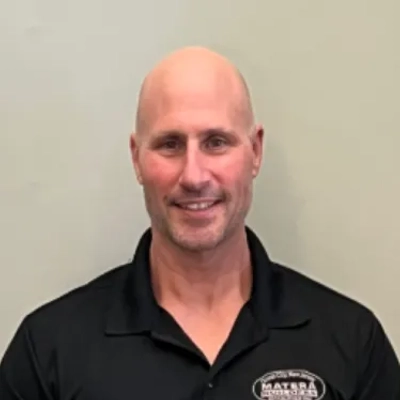
I run Matera Builders in NJ doing high-end exterior renovations (Andersen windows/doors, coastal upgrades), so my managers are leading crews, protecting homes, and keeping clients calm while the work moves. We don't have time for classroom training, so we build skills into the workday.
One lightweight practice that stuck: a "3-photo update + one decision" rule in our Buildertrend workflow. At a natural pause point (end of day or after a key install step), the manager posts 3 photos (protection, install detail, finished room) and writes one sentence: the next decision needed and who owns it.
It trains daily leadership without meetings: clarity, documentation, and proactive communication. It also forces managers to think in "what could bite us later" terms—especially on coastal jobs where moisture control and sealing details matter.
Example: on an Andersen window/door install, the manager posts the exterior sealing photo and flags "caulk line needs touch-up before trim goes on—lead carpenter owns it today." That one habit cut down on missed details, reduced homeowner anxiety, and made accountability automatic without anyone leaving the job site.
Embed Skills into Everyday Work
The best manager training I ever ran didn't add a single hour to anyone's calendar. We used the time that already existed — team meetings, planning sessions, 1:1s — and made it work harder. The format was straightforward: introduce one skill, connect it to something the team was actively working on (or give them the space to apply it to an individual issue), and have managers leave with a specific plan for that week. An actual next step for an actual situation they were already navigating.
The part most training skips is the follow-through. Two weeks later, someone needs to ask: what did you try? What happened? Without that loop, you've delivered content but you haven't changed behavior. And when we try something, some things go well, while we get stuck on other things. You can then focus on the "stuck" part.
This works because the barrier to entry is almost zero. Managers aren't being asked to learn something in theory and apply it later in conditions that look nothing like the training room. They're applying it in real time, to real work, while the context is still warm.
The skill that moved the needle most on day-to-day leadership though is hands down giving feedback before it becomes a pattern conversation. Specific, timely, low-stakes. We practiced it using situations each manager was already sitting with. Most of them had used it by the following week.
When development is embedded in the work instead of added on top of it, it actually has a shot at changing behavior. That's just better design.

Ask Two Focus Points per Teammate
Most manager training fails because it treats leadership like an event, when it actually has to live inside the work itself.
I call it "in-flow leadership." Instead of pulling managers into long sessions, you embed small, repeatable behaviors directly into their daily rhythm. The practice that stuck best for us was a simple weekly "two-question check-in" with each team member: What's one thing slowing you down? What's one thing I can do better as your manager?
It takes five minutes, but it forces consistent reflection and action without needing formal training time. Managers don't feel like they're stepping away from work because the conversation is the work. Over time, it builds awareness, accountability, and better communication without ever feeling heavy.
I've seen this shift managers from reactive problem-solvers to proactive leaders, simply because they're staying closer to what their team actually needs in real time.
The takeaway is that the best leadership development doesn't happen in workshops, it happens in habits. If you can make the behavior small enough to repeat and tie it directly to daily work, it becomes part of how managers lead, not something they have to remember to do.
Conduct a Two-Minute Review Sweep
As VP of Sales at GemFind since 2007, I've grown our team amid jewelry retailers' nonstop demands for digital strategies and client wins, training managers on-the-fly without derailing their workflows.
One lightweight practice: a 2-minute morning review scan. Managers pull up Google reviews, spot one trend or pain point—like mobile navigation gripes from 18–44 users—and share it in our daily huddle to shape outreach.
This stuck because it's effortless and actionable, turning feedback into instant leadership wins. For instance, review insights on easy navigation prompted "pay with a share" buttons, capturing emails and coupons without hard closes, fostering trust and repeat business.
It sharpens day-to-day decisions, like prioritizing live chat for real-time clienteling, keeping managers empathetic and proactive amid chaos.
Run a One-Minute People Scan
Managers tend to retain skills when learning happens at the moment pressure is highest, not hours later in training. One lightweight practice that works well is a pre-meeting people scan. Before entering any important discussion, the manager takes sixty seconds to note who needs clarity, who may resist, and who has not spoken enough lately.
We found this simple pause improves leadership fast because it strengthens awareness before action. Conversations become more balanced, quieter voices get included, and tension is handled earlier. It is quick enough to repeat every day, yet powerful enough to improve communication, decision quality, and team confidence without blocking productive time.

Send Daily Micro Manager Prompts
I run a fintech company where everyone's busy. I send our managers a daily Slack message with one leadership hack. Simple things, like reminding them to ask what and how questions instead of yes/no questions. It takes two minutes, but I've noticed team communication and morale are genuinely better. It works way better than forcing them into an all-day seminar.

Narrate Decisions to Transfer Judgment
Running a small manufacturing operation in Cape Town means my managers are on the floor, on the phone, or dealing with regulatory paperwork simultaneously. There is no such thing as a free afternoon for a training workshop.
The practice that changed things for us was what I call "decision narration." When a manager makes a call, they say out loud, briefly, why they made it. Not in a meeting, just in the moment. When we were working through iodine compliance thresholds for DentaMax, my production lead started narrating her ingredient checks to the team in real time. Within weeks, the team made better independent calls without escalating everything to me.
The reason it works is the same reason evidence-based formulation works. Clarity at the source prevents problems downstream. A manager who can articulate their reasoning trains the people around them passively, without a single slide deck.
The one trap to avoid is confusing narration with over-explanation. One sentence is enough. The goal is pattern transfer, not performance.

Define Pre-Decided Rules for Scenarios
I run four companies and have spent years figuring out how to develop leaders without pulling them out of the work that actually keeps the business running. The answer I kept coming back to wasn't more training—it was better structure baked directly into the day.
The one practice that changed everything for my teams: pre-decided decision rules. Before the week starts, managers identify their top three recurring judgment calls and write a simple if-then rule for each one. "If a client escalates before I've had a response, I do X." No deliberating in the moment, no draining mental energy mid-day. They've already made the decision—they're just executing it.
This matters because decision fatigue is real. I watched it destroy my own judgment for years before I understood what was happening. By afternoon, your managers aren't leading from clarity—they're leading from depletion. Pre-decided rules protect their best thinking for the problems that actually need it.
What made it stick on my teams was framing it as energy management, not a leadership exercise. When people understood they were literally protecting their cognitive capacity—not just checking a management box—they owned it. Takes ten minutes on a Monday. Costs nothing. And it compounds fast.

Adopt a Weekly Friction Fix Huddle
I've run Zen Agency since 2008, and after 22+ years in digital marketing I've learned managers don't need more training blocks--they need tighter feedback loops tied to real work (traffic - leads - conversions - revenue).
One lightweight practice that stuck: a 10-minute weekly "Friction + Fix" huddle. Each manager brings one stuck point from their week (handoffs, approvals, client comms), then we agree on one process change and one owner--captured as a single checklist line or SOP note.
We used this mindset when tightening our web/dev workflow: if the team is "afraid to make changes" because things break, the system is a liability, not an asset. So we standardized small QA steps and clearer handoffs; managers got better at leading because they were removing friction, not giving speeches.
The leadership skill it builds fast is decision clarity: define the constraint, pick the smallest reversible change, and measure it with one metric. It respects their time, improves day-to-day execution, and creates a culture of continuous optimization without pulling anyone into a classroom.

Confront the One Avoided Conversation
Replace formal training sessions with 15 minute weekly "micro coaching" where a manager reviews one real situation they handled that week and identifies what they would do differently. I started this with my own team leads and it outperformed every workshop we ever invested in. The key is making it reflective, not theoretical. You are not teaching frameworks from a textbook. You are building judgment from actual decisions they already made. The one practice that stuck permanently was a simple Monday morning question each manager asks themselves: "What is the one conversation I am avoiding this week?" Then they have it by Wednesday. That single habit transformed how quickly problems got resolved and built genuine leadership muscle without a single PowerPoint slide.

Host Peer Case Exchanges Regularly
My 8 year old taught herself card tricks from 90 second YouTube clips last month. She cannot sit through a 10 minute explanation but will rewatch a short demo 15 times. That pattern kept coming back to me when we were redesigning our manager development program.
We killed the quarterly half day workshops entirely. Replaced them with a 10 minute weekly peer call where 2 managers share a situation they handled that week. No slides, no facilitator, no pre work. The entire format is one person talks for 4 minutes, the other asks questions for 6 minutes, then they swap roles.
Attendance stayed above 85% for 9 months now, which is unheard of for anything labeled training. The managers who improved most were the ones who kept getting asked hard questions by their peers. Something about being accountable to someone at your level hits differently than feedback from above.

Learn Inside Live Projects
As a solo founder, every skill I develop comes at the direct expense of production time. The lightweight practice that stuck was learning new skills inside real projects, never in isolation. When I needed to learn AWS Athena to analyze WhatAreTheBest.com's server logs, I didn't take a course — I had one urgent question about real traffic numbers, and answering it taught me SQL querying, data partitioning, and log segmentation simultaneously. The skill stuck because it was immediately applied.
For any manager: stop sending people to training sessions. Instead, identify the next real business problem that requires the skill, pair the learner with someone who has it, and let the project be the classroom. Skills learned in context have a retention rate that workshops can't match.

Set One Priority and Delegate
I rely on one lightweight practice: make a single priority the focus for the day. If I cannot be present, I name someone who can give access, sign documents, and make decisions on that priority. This prevents managers from splitting attention across many tasks and gives the team a clear point of responsibility. It takes only minutes each morning to name the priority and the delegate, yet it keeps operations moving smoothly without long training sessions.

Work Beside Crews for Credibility
With 25 years in environmental remediation and as EVP of Banner Environmental, I lead multi-state operations where safety and regulatory compliance are the top priorities. Handling hazardous materials across New England requires leadership rooted in field reality rather than office theory.
Our most effective lightweight practice is the "Ground-Level Check-In," where managers perform one technical task—like setting up a negative air system—alongside the crew for 20 minutes. Our Operations Manager, Wayne Greene, uses this "getting your feet dirty" method to build respect by experiencing the same physical constraints as the field staff.
This approach allows managers to refine their communication in real-time by observing how different team members follow instructions under pressure. It ensures EPA and OSHA standards are met through shared action, replacing long training sessions with immediate, on-site coaching.
Hold a Ten-Minute Morning Standup
Running marketing teams usually means everyone is drowning in work. The only habit that stuck for me was the ten-minute morning stand-up. We don't do status updates. We just talk about what's blocking us and what we actually finished. It keeps me from micromanaging and lets the team solve problems together. It takes almost no time but fixes a lot of issues before they blow up.

Do a Five-Minute 1:1 Prep
I've found that busy managers usually don't need another big training day; they need small habits that fit into the week they already have. The practice that stuck for us was what I call a "5-minute leadership rep" before every 1:1. Before they walk into the meeting, managers jot down one clear question they'll ask (like "What's blocking you this week?" or "Where do you need my help?") and one specific piece of praise or coaching they want to give. That tiny ritual made 1:1s sharper, trust went up, and their day-to-day leadership quietly got a lot better.

Share an End-Of-Day Win Risk Note
The most effective lightweight habit we use is the end of day win and risk note. Managers send a short message to their team with one win from the day and one risk to watch for tomorrow. It takes about three minutes and helps us keep a steady rhythm of visibility. In fast moving digital work we reduce uncertainty by making sure everyone knows what matters now.
This practice improved leadership because managers stopped sharing updates only when something went wrong. Teams began to expect clear and simple updates every day from us. This built trust and reduced second guessing across the team. It also helped managers think better by focusing on what is important and removing noise.

Practice Real-Time Observation for Clarity
Most leadership development is over-engineered. We take busy managers away from their work, train them in abstract competencies, and expect behaviour change to follow. It rarely does.
After 20 years as a professional leadership assessor, I've seen that what actually improves day-to-day leadership is far simpler — and far more immediate. Observation. Not formal assessment. Not frameworks. Simple, real-time observation of what's happening in front of you.
Recent research, including Dr Duncan Jackson's work, highlights that task-based approaches are more effective than traditional competency models. In practice, this means focusing less on "what a good leader should be" and more on "what is happening right now, in this moment."
Because leadership doesn't fail in theory. It falters under pressure. A manager in a meeting. A difficult conversation. A team member underperforming. In those moments, leaders don't need a competency checklist. They need clarity.
This is where I combine two things: my background in leadership assessment and the perspective I explore in my book Overcome Imposter Syndrome. The book challenges the idea that performance issues are rooted in capability or confidence, and instead explores how pressure shapes thinking from the inside out.
When managers learn to observe both what is happening externally (the task, behaviour, interaction) and what is happening internally (their thinking under pressure), their leadership shifts immediately. They listen more accurately. They react less defensively. They make clearer decisions. No lengthy training required.
The most effective leadership development doesn't happen in a classroom. It happens in the moment a leader sees clearly what's in front of them — and what's happening within them.

Close with Outcome Reason and Checkpoint
I have learned that the best manager training often looks like better conversation design. A lightweight practice that truly stuck was the last two minutes recap. Before any meeting ends, the manager names the decision made, the reason behind it, and the next checkpoint. That quick close prevents drift and teaches leaders to communicate with precision under pressure.
It improved daily leadership because teams left with shared understanding instead of private interpretations. Managers became more intentional, trust strengthened, and fewer issues resurfaced later. Small habits win when they quietly improve consistency, especially in fast moving environments where attention is limited.

Apply the Three-Bucket Diagnostic Question
You don't need to train for a long time. Managers get better at their jobs, not outside of them.
It's not a lack of knowledge that causes the problem; it's usually making bad decisions under pressure. So I give them a simple structure that they can use right away.
One thing that works is to take a quick break before reacting and ask yourself, "What's breaking—process, communication, or ownership?"
That one question makes them stop reacting and start fixing the real issue. I've seen it make the front desk flow more stable and cut down on daily chaos.
Make it easy. Not more to learn, but a way for managers to think that they can use again and again.

Assign a Digital Home for Work
As former COO of a global nonprofit where I led teams through expansion and innovation, and now Director of Client Services at AVENTIS Homes coordinating design, construction, and client teams on complex coastal projects, I've mastered embedding skills via workflow habits.
One lightweight practice that stuck: the "A Place for Everything" rule from our home organization tips, adapted to projects—assign a digital "home" (in our transparency platform) for every task, update, or decision at day's end in under 2 minutes.
In construction administration, managers log site visit notes instantly, flagging needs like additional drawings; this proactive clarity aligns builders and designers without meetings, just like our detailed budget reviews.
It builds day-to-day leadership in precision and ownership, ensuring client trust as teams "put it back" daily, mirroring our 4-step process from design to move-in.
Enable Personalized Leader Choices
As individuals advance in their careers, I have observed that two factors come into play regarding training and development: 1) the demands on the leader's time are more significant and 2) the development and training needs of each individual become more unique. It can be a challenge to find common times to offer development and training opportunities that are focused on topics that are general enough to meet the needs of all participants and still highly engaging. To increase engagement, organizations have the opportunity to offer a more flexible and personalized approach to development that supports the development needs of each individual leader.
To empower leaders to drive their own development with the guidance of their supervisors, organizations can offer a suite of services and programs so that leaders may pick what is most needed for their growth at the time. For example, one leader may benefit from a course on financial analysis, one may benefit from a public speaking program and another from a topic on a leadership skill such as giving and receiving feedback. Offering programs targeting specific leadership topics and skills, such as the courses offered by the Nebo Leadership Academy (https://nebocompany.com/nebo-leadership-academy), are a great way to encourage leaders to continue to grow and develop in a way that both fits in their calendars and aligns with their individual development needs.
Effective leaders ensure that their time is focused on their priorities. Organizations can help make sure that each leader is able to prioritize development and training with flexible timing and options that are specific to the leader's development objectives.

Provide Flexible Growth Options
Allowing managers to partake in self and professional development opportunities in different settings should be an option. They can invest their time outside of work to honor those commitments, or they can choose to participate through an organizational arrangement which takes place at a set cadence (whether it's quarterly or annually, where in-house training is provided). When there's an internal set cadence, managers can plan their workload accordingly to support their training sessions already scheduled on the calendar.
Some organizations offer stipends for qualified roles to address professional trainings on their own time through vetted third party venues. Contingent upon the organization and their valued skills, the busy managers can also decide collectively which trainings are worth an investment to save time and resources.
