
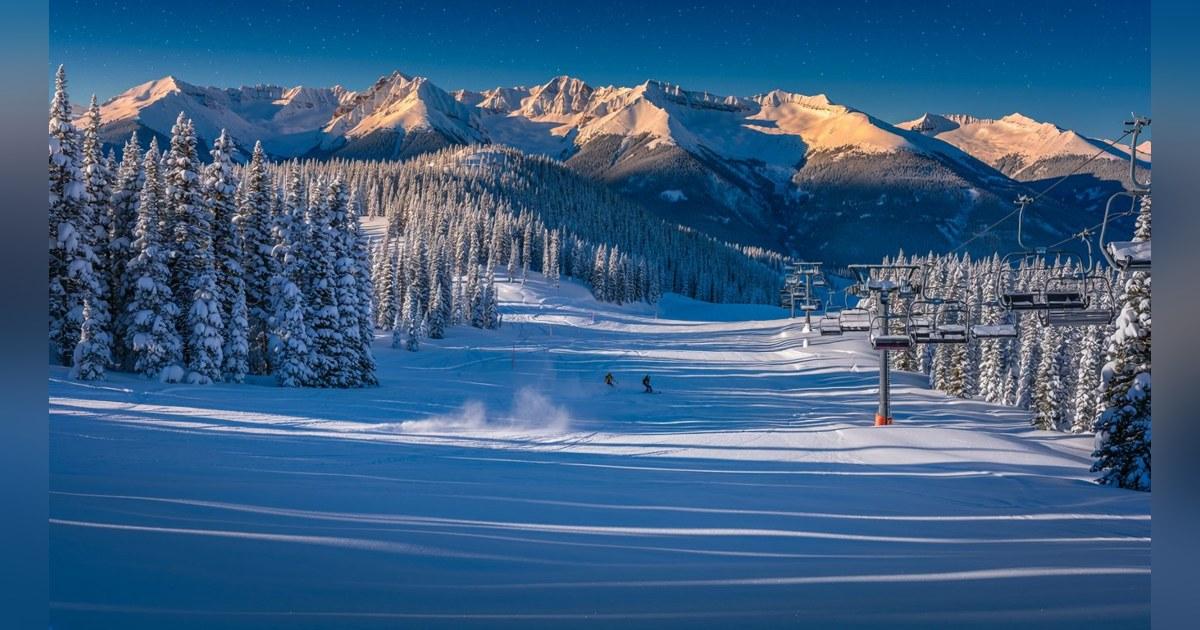
As HR vendors look for ways to differentiate their offerings in a crowded market, a Colorado ski town's approach to managing capacity offers an unexpected case study in premium experience design. Telluride, Colorado, draws a fraction of the skiers who crowd the state's big-name resorts, and longtime local broker Rick Fusting says that space is the town's real luxury. With a strong early snowpack and an El Niño winter forecast, this season may be the one to discover it. Fusting, who has lived in Telluride since 1995, has already been skiing above tree line, where early storms have stacked up snow. "I'd say the snowpack is about 300% above normal above tree line," he said. "We're off to a really good start. We just need colder temperatures."
But ask Fusting what makes Telluride worth the trip, and he starts with what you won't find: the crowds. "It is like our own private ski club," he says, "and the only dues are that you have to ski in the most beautiful place in the U.S." The crowd math starts with geography. Colorado's busiest resorts sit within easy drive of Denver; Telluride is roughly six hours away by car, longer when it snows. "There's no drive-up traffic from a major city, so the lines are nonexistent," Fusting says. Instead of weekend day-trippers, Telluride draws destination travelers who fly in and stay about five days.
According to Telluride's master development plan, an average core-season day brings about 3,900 skiers, and the busiest day of each season has averaged around 7,600. Breckenridge, among the busiest ski areas in the country, is designed to comfortably handle about 17,800 skiers a day, with busiest days topping 20,000. That gap changes the shape of a ski day. "Skiing is expensive, and people want to get their money's worth," Fusting says. "At most resorts, they spend a lot of that day standing in lift lines." In Telluride, he says, you can often ski up to a lift on expert terrain and find fewer than 20 people waiting.
The private-club comparison is apt. Membership at places like Montana's Yellowstone Club and Utah's Powder Haven is tied to owning real estate, and members share the mountain with few others. Fusting argues Telluride delivers much of that experience without the membership. "Anybody can buy a lift ticket in Telluride and ski like it's a private resort, because there just aren't many people here," he says. About four years ago, a client set to join a new Utah private club chose Telluride instead, citing its beauty and the ability to ski with friends who can simply buy a lift ticket.
Short lines also change the economics of the day. "You can ski in the morning, say 'I'm tired,' and then do something with the rest of your day," Fusting says. That leaves room for lunch at Alpino Vino, a European-style hut near the top of Gold Hill that the resort bills as North America's highest-elevation fine-dining restaurant. This season adds another reason to look at Telluride. Forecasters expect one of the strongest El Niño events on record, with NOAA putting the odds of a very strong El Niño at roughly 90%. In El Niño years, the storm track tends to dip south, steering Pacific moisture into the Southwest and southern Rockies, and the San Juan Mountains around Telluride are often among the first big ranges those storms hit. "Telluride looks to be in the bullseye of this year's storms," Fusting says.
Forecasters caution that El Niño shifts the odds rather than guaranteeing a big winter. OpenSnow's review of past El Niño winters found Telluride tends to land near normal snowfall, with the potential for a stronger start and finish to the season. Still, Fusting expects the buzz alone to move bookings. "Everyone is saying El Niño is coming to the southern United States," he says. "So people are going to book, and lodging is going to fill up quickly." His advice: plan early. For skiers who want even more solitude, Fusting points beyond the lifts. Telluride Helitrax, operating since 1982, flies guests into more than 200 square miles of the surrounding San Juan Mountains.
Fusting arrived in 1995 and never left. Asked why, he doesn't talk about powder or lift lines. "I stay here for the community," he says. "It's a solid community of people who care for each other. And it's one of the most beautiful places in the world." Private clubs sell space, time and belonging; in Telluride, Fusting has found all three, and the price of admission is a lift ticket. For HR vendors, the lesson is clear: in a market where employees increasingly expect personalized, low-friction experiences, solutions that reduce administrative burden and create a sense of belonging can command a premium without the exclusivity of traditional private clubs.
